ZigoTrace

Tag: Traceability

  • Supply Chain Auditability: What Can an Auditor Reconstruct?

    Supply Chain Auditability: What Can an Auditor Reconstruct?

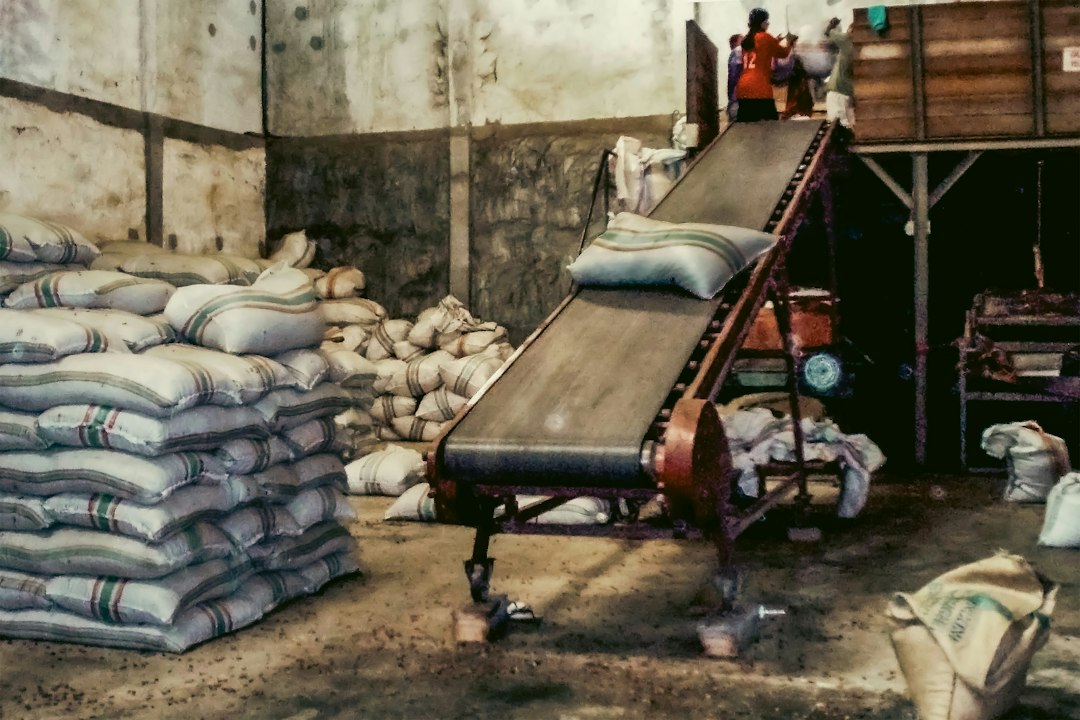
    Coffee sacks being weighed at an agricultural aggregation point
    Photo by Paulo Evangelista on Unsplash (source)

    Supply chain traceability can show where a product moved. Supply chain auditability has to answer a harder question: can an independent reviewer reconstruct why a claim about that product was accepted, by whom, and under which rule, at the time the decision was made? The distinction matters when a buyer or regulator asks not only for a lot’s origin, but for the evidence behind its origin, the transformation from source record to compliance statement, and what the system did when the record was incomplete. A route through several suppliers is a history of movement. An auditable decision is a history of reasoning, bounded by the evidence actually available.

    The difference is easy to miss because both jobs produce records. Article 18 of the EU General Food Law asks food businesses to identify their immediate suppliers and the businesses to which they supplied products, and to make that information available to competent authorities on demand [1]. That one-step-back, one-step-forward model is useful for tracing a product through the commercial chain. It does not, by itself, show which source record supported a later compliance conclusion, whether the source was changed, or which rule version was applied. For an exporter preparing for the EU Deforestation Regulation, the question can reach down to geolocation, production and due diligence information associated with a commodity and its plots [2]. A summary row may be convenient, but it is not a reconstruction.

    What supply chain auditability adds to traceability

    Supply chain auditability is the ability to reproduce the basis of an operational or compliance decision from the records, sources and rules that were in force when it was made. It depends on traceability, but adds the lineage of the evidence and the decision itself. A useful audit record therefore needs to preserve more than a timestamp and a final status: it should identify the claim, its source evidence, who or what supplied it, any transformation or correction, the policy or rule version used, the uncertainty that remained, and the action permitted by that evidence. If an input changes later, a reviewer should still be able to see what the earlier decision relied on, rather than silently inheriting today’s view of yesterday’s lot.

    The distinction is not an argument for recording every keystroke forever. Audit data has a cost, and unnecessary collection can create privacy and commercial risks. It is an argument for capturing the minimum context that makes a decision replayable. If an exporter marked a batch ready for a buyer, the reviewer should be able to identify which plot records and custody events supported that readiness, which checks ran, which gaps remained open, and whether the output was a pass, a warning or an inconclusive result. A one-word status without its decision context cannot answer those questions, even if the database that stores it has never lost a byte.

    Standards describe events and provenance, not truth

    Supply chain standards give implementers a shared structure for describing what happened. GS1’s EPCIS standard models visibility events around the what, when, where, why and how of products and assets, including their movement and status [3]. ISO 22005 sets principles and basic requirements for traceability systems in feed and food chains [4]. These models help different organisations exchange consistent event information instead of translating every partner’s private spreadsheet into another private spreadsheet. That is a necessary foundation for an audit, because an event that cannot be interpreted across organisations is difficult to challenge or verify.

    But an event schema answers a structural question, not an epistemic one. It can help record that a cooperative received a quantity of coffee at a time and place. It cannot establish, simply by storing the event in the right fields, that the quantity was weighed accurately or that the named plot supplied it. W3C PROV-DM and PROV-O make a complementary contribution by describing data provenance through entities, activities and agents, including how an entity was generated or used [5][6]. In plain terms, they help represent where a piece of information came from and what processes acted on it. They do not turn a recorded assertion into a verified physical fact.

    Research on knowledge-graph provenance illustrates what a richer history can make possible. Dibowski’s PROV-STAR implementation tracked changes to an industrial knowledge graph and enabled reconstruction of earlier graph states, with measured storage and query performance in that specific system [7]. That is a technical demonstration of history reconstruction, not an agricultural field trial and not proof that every original input was correct. Wang and Strong’s data-quality framework makes a related point from the consumer’s perspective: usefulness depends on more than accuracy, including whether data is relevant, timely, complete, understandable and accessible for its context [8]. An audit trail can preserve a record perfectly and still preserve a record that is late, incomplete or misattributed.
    Agricultural lot records reviewed beside coffee samples
    Photo by Nathan Dumlao on Unsplash (source)

    Why audit replay matters at aggregation points

    The audit question becomes concrete when records cross organisational boundaries or products are combined. The International Trade Centre has described the mixing, or “mixage,” of raw agricultural commodities at cooperatives, warehouses and markets as a challenge to maintaining traceability in developing-country supply chains [9]. A lot assembled from smaller deliveries needs a defensible account of which inputs entered it, what quantities were recorded, and how the aggregate relates to each source. If a spreadsheet is corrected after a buyer query, the correction should not erase the earlier value or the reason it changed. The reviewer needs the path from source records to the current lot, not just a final export that looks complete.

    This matters especially where the first-mile record is created under uneven connectivity, limited administrative capacity or different incentives. The ITC bulletin and a later systematic review of blockchain in small-scale agri-food business both identify practical data-quality and adoption barriers; the latter also cautions that the evidence base directly focused on small-scale agribusiness was limited [9][12]. Requiring a polished digital record without making the provenance of that record inspectable can move the paperwork burden onto the least-resourced participant while leaving the buyer no better able to assess it. An audit process should expose which records came from a farmer, which were entered by a cooperative operator, which were inferred or transformed, and where the chain still depends on an unverified statement.

    That last distinction is not new, but it is often hidden by the word “immutable.” Powell and colleagues’ analysis of IoT and blockchain in food supply chains argues that tamper-evident storage does not solve the question of whether the data was sound when it entered the system [10]. Malik and colleagues similarly treat trust in supply-chain data as a separate problem from protecting an audit trail against alteration [11]. The practical lesson is broader than any one technology: auditability tells a reviewer how a conclusion was reached and whether its history changed. It does not guarantee that the original observation was true. This is the same boundary explored in governed provenance, but here the emphasis is the ability to replay a decision rather than the storage mechanism used to preserve it.

    What an audit-ready decision should show

    A useful audit view should let a reviewer move from a conclusion back to the evidence and forward to the consequence. It should distinguish a source document from a value extracted from it, and both from a claim that an operator later entered into a compliance workflow. It should show the age and authority of evidence, the check or rule that interpreted it, and the version of that rule. When a check cannot answer because a record is missing, a data provider is unavailable or a source falls outside its coverage, the result should remain visibly inconclusive rather than becoming a clean status by default. That is how a reviewer can tell the difference between “no problem was detected” and “the system had enough evidence to check.”

    ZigoTrace is designed around this kind of evidence path for agricultural supply chains. Its local-first workflow indexes an organisation’s records in place, builds a provenance graph across plots, suppliers and lots, and runs deterministic checks for gaps such as broken custody, missing geolocation, temporal impossibility and mass-balance inconsistencies. Its evidence-confidence layer carries uncertainty along the custody chain rather than treating every link as equally strong. When a check cannot support an answer, the product’s stated posture is to surface an inconclusive or not-configured result, not to fabricate a clear one. Those capabilities can make a compliance decision easier to inspect; they do not make ZigoTrace an independent auditor, certify a supplier’s claim or guarantee that a regulator will accept every generated document.

    The standard for supply chain auditability is not the largest possible log. It is whether the people accountable for a decision can later reconstruct the evidence, authority and rule that produced it, while still seeing what was unknown. A trace can show that a lot moved. A defensible audit trail can show why someone believed it was the right lot, what would change that conclusion, and what the system did before the uncertainty was passed downstream. See what your existing agricultural records can support.

    Frequently asked questions

    What is supply chain auditability?

    Supply chain auditability is the ability to reconstruct the evidence, actors, transformations and rules behind a supply-chain decision. It extends product traceability by showing why a claim was accepted, not only where goods moved [3][5].

    Is a tamper-proof audit trail proof that the data is true?

    No. A tamper-evident history can show that a record was not changed after entry, but it cannot establish that the original observation was accurate or properly attributed [10][11].

    What should an agricultural audit trail preserve?

    It should preserve the source and age of evidence, the actor or system that supplied it, changes and transformations, the rule version applied, the decision made, and any uncertainty or missing information that limited the result [2][5][6].

    References

    1. European Parliament and Council. Regulation (EC) No 178/2002, Article 18. https://eur-lex.europa.eu/eli/reg/2002/178/oj
    2. European Parliament and Council. Regulation (EU) 2023/1115 on deforestation-free products. https://eur-lex.europa.eu/eli/reg/2023/1115/oj
    3. GS1. EPCIS Standard, version 2.0. https://ref.gs1.org/standards/epcis/2.0.0/
    4. International Organization for Standardization. ISO 22005:2007, Traceability in the feed and food chain. https://www.iso.org/standard/36297.html
    5. Belhajjame et al. PROV-DM: The PROV Data Model. W3C Recommendation, 2013. https://www.w3.org/TR/prov-dm/
    6. Belhajjame et al. PROV-O: The PROV Ontology. W3C Recommendation, 2013. https://www.w3.org/TR/prov-o/
    7. Dibowski, H. (2024). Full Traceability and Provenance for Knowledge Graphs. FOIS 2024. https://doi.org/10.3233/FAIA241309223
    8. Wang, R. Y., and Strong, D. M. (1996). Beyond Accuracy: What Data Quality Means to Data Consumers. Journal of Management Information Systems, 12(4), 5-33. https://doi.org/10.1080/07421222.1996.11518099
    9. International Trade Centre. (2015). Traceability in Food and Agricultural Products. Standards and Quality Bulletin No. 91. https://www.intracen.org/file/eqm-bulletin-91-2015traceabilityfinal-14oct15webpdf
    10. Powell, W., Foth, M., Cao, S., and Natanelov, V. (2022). Garbage in garbage out: The precarious link between IoT and blockchain in food supply chains. Journal of Industrial Information Integration, 25, 100261. https://eprints.qut.edu.au/212325/1/JII_D_20_00049.R3_eprints.pdf
    11. Malik, S., Dedeoglu, V., Kanhere, S. S., and Jurdak, R. (2019). TrustChain: Trust Management in Blockchain and IoT Supported Supply Chains. IEEE International Conference on Blockchain. https://arxiv.org/abs/1906.01831
    12. Jellason, N. P., Ambituuni, A., Adu, D. A., and Manning, L. (2024). The potential for blockchain to improve small-scale agri-food business’ supply chain resilience: a systematic review. British Food Journal, 126(5), 2061-2080. https://doi.org/10.1108/bfj-07-2023-0591
  • Food Safety Compliance Traceability Starts Before the Laboratory

    Food Safety Compliance Traceability Starts Before the Laboratory

    Crates of freshly harvested green beans, checked for pesticide residues before export.
    Photo by Snappr on Unsplash (source)

    Food safety compliance traceability is the ability to show, for a specific lot, not only who supplied it and who received it, but whether the records that govern its safety were true of that lot at the moment they mattered. Almost one in ten people worldwide falls ill from contaminated food each year, about 600 million illnesses and 420,000 deaths on the World Health Organization’s estimates for 2010, published in 2015, and the WHO African Region carries the highest burden per population, with more than 91 million people falling ill and 137,000 dying each year [1][2]. The burden is mostly microbial, and a residue interception is not an outbreak. The lateness is shared: by the time a laboratory can see the problem, the lot has moved, and the records that would have shown the risk were never joined. A supply chain traceability file that can name the shipper and the buyer, and still cannot say whether a spray and a harvest on the same plot were far enough apart, is complete in the sense current food law asks for and silent on the question that failed the consignment.

    Why food safety compliance traceability fails between two complete records

    A residue violation is often a relationship between two records that are each, on their own, in order. The pre-harvest interval is the minimum time between the last pesticide application and harvest, it is printed on the product label, and keeping it is a legal requirement precisely so that residues fall to or below the maximum residue limit, the concentration of that substance legally tolerated on that food [3][4]. A spray book that records the product, the dose and the date is a complete spray record. A harvest ticket that records the plot, the date and the weight is a complete harvest record. Neither document, read alone, can say whether the interval was observed, because the violation lives in the time between them. Consequently, the implications of filing those two records in different books, or in different companies, are larger than a missing signature: the exporter can produce every page an auditor asks for and still have no way to see the lot that should never have been picked.

    This is the unglamorous bit, and it is where most food-safety files quietly stop. A certificate of analysis tells you what a laboratory found in a sample after the fact. It does not tell you which other lots from the same application were not sampled, and it does not tell you that harvest fell on day three of a seven-day interval. Governed provenance has the same shape under a different rule: a record can be intact, signed and stored, and still not be true of the lot it is attached to. Food safety compliance traceability asks for that second property, the join, and most traceability systems were built to answer who held the goods, not whether the interval survived.

    What EU residue checks and Kenya’s bean exports already show

    The European picture looks calm until you look at where the failures land. In 2023 the European Food Safety Authority reported on 132,793 food samples analysed under the EU pesticide monitoring programmes. Of those, 127,816, or 96.3 percent, fell within legal limits. Maximum residue levels were exceeded in 4,977 samples, 3.7 percent, and once measurement uncertainty was taken into account 2,694 samples, 2.0 percent, were non-compliant and open to enforcement [5]. Those limits are set under Regulation (EC) No 396/2005, which is the rule a border laboratory is applying when it holds a consignment [6]. A two percent non-compliance rate is easy to describe as a system that works. Concentrated on a few origins and a few crops, it is also enough to close a market.

    Kenya’s vegetables are the worked example. CBI, drawing on the Rapid Alert System for Food and Feed, counts 28 Kenyan green-bean consignments that failed EU maximum residue levels in 2024, more than Sri Lanka, Bangladesh and India combined in the same note, and records that Regulation (EU) 2019/1793 already requires checks on 10 percent of bean imports from Kenya [7]. The Agriculture and Food Authority, reported by Business Daily, put the wider vegetable season in commercial terms: export earnings fell 53.83 percent, from Sh50.9 billion in 2023 to Sh23.5 billion in 2024, MRL interceptions rose from 25 to 57, and the authority said EU inspection of Kenyan vegetables moved from 5 percent to 15 percent, blaming notifications on French beans and snow peas [8]. Those are different series, and they should not be added. They point the same way. Several retailers in the United Kingdom, Germany, the Netherlands and Austria do not buy at the legal ceiling: CBI says they ask for 50 percent or even 33 percent of the EU limit, and some cap active substances at three [7]. A lot that passes a public laboratory can still fail the buyer paying for the freight.

    The 2024 Alert and Cooperation Network report shows the same pattern across the Union. Notifications rose 8 percent to 9,460, and Rapid Alert System notifications rose 12 percent to 5,250. About one third of those were border rejections, mainly pesticide residues in fruit and vegetables. Fruits and vegetables were the largest category in that network, 1,479 notifications, 16 percent of all Alert and Cooperation Network notices, and pesticide residues were the leading issue, with oranges, peppers, chlorpyrifos and acetamiprid recurring [9]. The laboratory is doing the job it was given. The open question is why the interval was not visible before the sample was drawn.

    Why one step back and one step forward cannot see a pre-harvest interval

    A field worker spraying a vegetable crop, the application a pre-harvest interval is counted from.
    Photo by Wolfgang Weiser on Unsplash (source)

    European food law has required traceability since 2002, and it defined the job narrowly on purpose. Article 18 of Regulation (EC) No 178/2002 says a food business must identify who supplied it and which businesses it supplied, and must produce that information to the competent authority on demand [10]. Commission guidance calls this one step back and one step forward: supplier to product, product to customer, with no duty to name the final consumer [11]. That design is good at a recall. It is weak at a residue, because the supplier of a pooled lot may be a broker who never saw the spray, and the customer may learn the result only when a border laboratory does. Nothing in Article 18 asks whether harvest and the last application on the same plot respected the interval on the label.

    The United States is moving further along the lot, and still not as far as the interval. The Food Safety Modernization Act’s traceability rule requires a traceability lot code and key data elements at critical tracking events, including harvesting and cooling, for foods on the Food Traceability List, available to the Food and Drug Administration within 24 hours or a time the agency agrees [12]. The original compliance date was 20 January 2026. The FDA has said it will not enforce the rule before 20 July 2028, consistent with a direction from Congress [12]. A lot code that survives packing makes a recall faster, and a harvest date is useful. It still does not contain the product applied, the dose, or the interval that product required. An exporter can be ready for that rule and remain blind to the failure Kenya is already paying for.

    The EU Deforestation Regulation already asks for a relationship to a plot, not merely to the company that shipped the container. Food safety has not written the pre-harvest interval into statute in those terms. Buyers and border laboratories are enforcing it anyway, one consignment at a time.

    What has to be true before a laboratory result means anything

    A laboratory result means something about a lot only when three earlier facts are already joined: which plot the lot came from, what was applied there, and whether harvest waited out the interval on the label. ZigoTrace’s general module sits on the same provenance graph as the other compliance checks, and the pre-harvest-interval check is what that graph is for. A spray record and a harvest record, read together, can flag a residue risk that neither record flags alone. Where either record is missing, or the interval on the label is not in hand, the honest output is inconclusive, not a guessed clear. That is the same rule the product already applies when a satellite pass cannot be read: a check that cannot answer must say so. A passed certificate of analysis is a statement about a sample. It is not a substitute for the interval, and a system that prints a pass because the sample was clean is describing the sample, not the lot.

    Yet, it remains to be seen whether exporters will treat the interval as a record kept at picking, or as an argument had with a laboratory after the consignment has left. The second habit is the one the 2024 numbers describe. The first is available to any packhouse that already writes down the spray and already writes down the harvest, and simply never puts the two dates on the same line. Food safety compliance traceability, in that narrower sense, is not a new sensor and not a new certificate. It is the refusal to call a lot safe until the relationship the border is already punishing has actually been checked.

    Book a demo to see whether the spray date and the harvest date on a lot you already ship would have survived the interval.

    References

    1. World Health Organization, WHO estimates of the global burden of foodborne diseases: Foodborne Disease Burden Epidemiology Reference Group 2007-2015, 2015. https://www.who.int/publications/i/item/9789241565165
    2. World Health Organization, “WHO’s first ever global estimates of foodborne diseases find children under 5 account for almost one third of deaths,” news release, 3 December 2015. https://www.who.int/news/item/03-12-2015-who-s-first-ever-global-estimates-of-foodborne-diseases-find-children-under-5-account-for-almost-one-third-of-deaths
    3. Health Canada, “Understanding Preharvest Intervals for Pesticides.” https://www.canada.ca/en/health-canada/services/consumer-product-safety/reports-publications/pesticides-pest-management/fact-sheets-other-resources/preharvest-intervals.html
    4. Food and Agriculture Organization, “Maximum Residue Limit (MRL)” definition, JMPR appendices, after Codex Alimentarius Vol. 2A. https://www.fao.org/4/x5848e/X5848e0b.htm
    5. European Food Safety Authority, “The 2023 European Union report on pesticide residues in food,” EFSA Journal, 2025. https://efsa.onlinelibrary.wiley.com/doi/10.2903/j.efsa.2025.9398
    6. Regulation (EC) No 396/2005 of the European Parliament and of the Council on maximum residue levels of pesticides in or on food and feed of plant and animal origin. https://eur-lex.europa.eu/eli/reg/2005/396/oj
    7. CBI, “Entering the European market for fresh green beans,” updated 30 December 2025. https://www.cbi.eu/market-information/fresh-fruit-vegetables/green-beans/market-entry
    8. Linet Owoko, “Kenya vegetable exports hit by tough EU market rules,” Business Daily, 3 September 2025, reporting Agriculture and Food Authority disclosures. https://www.businessdailyafrica.com/bd/markets/commodities/kenya-vegetable-exports-hit-by-tough-eu-market-rules-5179240
    9. European Commission, Alert and Cooperation Network 2024 Annual Report, announced 2025. Commission notice: https://ec.europa.eu/newsroom/sante/newsletter-archives/63452
    10. Regulation (EC) No 178/2002, Article 18 (traceability). https://eur-lex.europa.eu/legal-content/EN/TXT/?uri=CELEX:32002R0178
    11. European Commission, Guidance on the implementation of articles 11, 12, 14, 17, 18, 19 and 20 of Regulation (EC) No 178/2002 on General Food Law, section on Article 18. https://food.ec.europa.eu/system/files/2016-10/gfl_req_guidance_rev_8_en.pdf
    12. U.S. Food and Drug Administration, “FSMA Final Rule on Requirements for Additional Traceability Records for Certain Foods.” https://www.fda.gov/food/food-safety-modernization-act-fsma/fsma-final-rule-requirements-additional-traceability-records-certain-foods

    Frequently asked questions

    What is food safety compliance traceability?

    Food safety compliance traceability is the ability to show, for a specific lot, who handled it and whether the safety-relevant records were true of that lot, including whether harvest waited out the pre-harvest interval after the last pesticide application [3][10]. Naming the supplier and the customer, which is what Article 18 of Regulation (EC) No 178/2002 requires, does not by itself answer the interval [10][11].

    What is a pre-harvest interval?

    A pre-harvest interval is the minimum time between the last application of a pesticide and harvest of the treated crop. It is stated on the product label, and keeping it is what the label relies on so that residues stay at or below the maximum residue limit [3][4].

    Does a passed residue test prove a lot was grown within the interval?

    No. A certificate of analysis reports what a laboratory found in the sample it tested. It does not show which other lots from the same application were not sampled, and it does not reconstruct the days between spray and harvest. In 2023, 2.0 percent of 132,793 EU monitoring samples were non-compliant after measurement uncertainty, which is a statement about tested samples, not about every lot that shipped [5].

    When do US food traceability records have to be ready?

    The FDA’s Food Traceability Rule requires a traceability lot code and key data elements at events including harvesting and cooling. Its original compliance date was 20 January 2026. The FDA has said it will not enforce the rule before 20 July 2028 [12].

  • The Post-Harvest Loss Numbers Nobody Actually Measured

    The Post-Harvest Loss Numbers Nobody Actually Measured

    Crates of harvested tomatoes at a market, the point in the chain where post harvest losses in Africa are highest and least measured.
    Photo by Margo Evardson on Unsplash (source)

    Almost every programme designed to reduce post harvest losses in Africa is being planned against a figure that was modelled rather than measured. The Food and Agriculture Organization puts global food loss after harvest at 13.3 percent for 2023, with sub-Saharan Africa the highest region at 23.0 percent, up from 22.1 percent in 2015 [1]. Those look like measurements. They are the output of an estimation model, and FAO says so plainly: the 2023 movement falls within the expected range of model oscillations and was driven largely by updated national production data and revised country-level estimates [1]. Something changed in the arithmetic. Whether anything changed in a warehouse is a separate question the data cannot answer. This is not a criticism of FAO, which has been unusually candid about the limits of what it publishes. It is a description of the ground every investment decision in this sector is currently standing on.

    Why the headline loss figures are estimates of an estimate

    The Global Food Loss Index is model-based by design, because nationally representative primary data on losses is generally not available [2]. The scale of that absence is easy to underestimate. In 2016, only 23 of 185 countries had reported loss data for even one commodity [3]. The model exists to fill a gap that is close to total, drawing on official statistics where they exist and on scientific literature where they do not, then extrapolating across commodity groups and regions. Based on that structure, we can understand why a single figure for a continent should be read as a reasoned position rather than a finding.

    The problem compounds at the point of collection. Where primary data does exist, much of it is self-reported by farmers and traders recalling what they lost, and the research on this is consistent: aggregated self-reported measures understate actual losses [4]. The bias runs in one direction. Nobody over-reports the grain they let spoil. So the sector works with modelled numbers built partly on measured numbers that are themselves systematically low, and the widely quoted range for Africa, between 30 and 50 percent [5], is wide enough to describe two entirely different problems. At 30 percent, post-harvest loss is a serious inefficiency. At 50 percent, half of everything grown never feeds anyone, and the economics of African agriculture are not what anyone’s spreadsheet says they are. Programme documents cite the range as though the distinction were a rounding detail.

    Set against that, the global picture from the waste side is comparatively well instrumented. UNEP’s Food Waste Index found 1.05 billion tonnes of food wasted in 2022, roughly 19 percent of what reached consumers, on top of the 13 percent lost earlier in supply chains, with households responsible for 631 million tonnes, about 79 kilograms per person per year [6]. Consumer-end waste happens in countries with retail scanners, municipal waste audits and census infrastructure. Farm-gate and first-mile loss happens where none of that exists, which is precisely where the losses are largest. The measurement effort is inversely proportional to the size of the problem.

    The money is arriving regardless, and it cannot be evaluated

    Capital has stopped waiting for better numbers. The Green Climate Fund’s Re-Gain programme is preparing to scale post-harvest loss solutions across seven countries, Burkina Faso, Ethiopia, Kenya, Malawi, Tanzania, Uganda and Zambia [5]. Cold-chain operators are raising real money: Koolboks closed an 11 million dollar Series A in September 2025 and reports more than 10,000 solar-powered freezers deployed across 25 countries [7], while in Kenya SokoFresh runs cold storage for over 7,000 farmers and InspiraFarms raised 1.09 million dollars in 2024 to extend off-grid capacity [8]. The Middle East and Africa cold chain market is forecast to grow from 23.8 billion dollars in 2022 to 35.1 billion by 2028 [9]. All of this is aimed at a bottleneck that is undeniably real: only around 5 percent of fresh produce in Africa passes through a cold chain at any point, and fruit and vegetables carry losses at the top of the 30 to 50 percent range [9].

    Yet consider what happens at the end of a five-year programme. A fund has financed several hundred cold rooms. It wants to report how much food was saved. The baseline it started from was modelled, the endline will be modelled by the same method, and the difference between two model outputs is not evidence that produce survived. Worse, a genuinely successful intervention can look like a failure: better record-keeping at a site that has just been equipped with a monitored cold room will often surface losses that were previously invisible, so measured loss goes up while real loss goes down. Consequently, the implications of this gap reach past accounting. Investors price unmeasurable outcomes conservatively, which means the cost of capital for post-harvest infrastructure stays higher than its actual returns warrant, and the projects that get funded are the ones whose benefits can be asserted confidently rather than the ones that work best.

    The data that would settle it already exists at intake

    Produce being weighed at intake, the record that turns post-harvest loss measurement into arithmetic rather than a survey.
    Photo by motomoto sc on Unsplash (source)

    Here is what makes this frustrating rather than merely difficult. The measurement everyone is missing is not exotic. Post-harvest loss, at any single step, is the difference between what went in and what came out, adjusted for grade. A cooperative that weighs each member’s delivery at intake, records a grade, and later dispatches a known tonnage to a buyer has, without intending to, described its own loss. The numbers are written down. They are simply written down in separate places, for separate purposes, by people who were never asked to compare them.

    This is the same structural problem that export compliance has spent the last three years forcing the sector to solve. An operator preparing an EUDR due diligence statement has to tie a shipment back through aggregation to the plots that produced it, which means recording what entered the chain, what left it, and how the two relate at every step in between. Once that chain exists, mass-balance arithmetic across it is close to free: a conservation check that flags where output exceeds plausible input, or where input disappears without a corresponding dispatch, is the same calculation a loss measurement needs. The difference is only which question you ask of the record. Firms building this capture for supply chain traceability reasons are inadvertently building the first credible loss measurement infrastructure the continent has had, and most of them have not noticed.

    There is a condition attached, and it is the one that decides whether any of this is worth trusting. The record has to be created at the moment of the event, by or with the counterparty to it, rather than reconstructed afterwards. A weight captured at the scale by the person receiving the delivery is evidence. The same figure recalled at the end of the season is the self-reported data that the literature already shows understates by an unknown margin [4]. The distinction between capture and recall is, in practice, the entire difference between a number a lender will underwrite and a number that merely populates a report.

    What changes when the number becomes defensible

    It would be overselling this to suggest that measurement saves food. It does not. A perfectly instrumented chain that tells you precisely how many tonnes of tomatoes rotted has saved no tomatoes, and the first honest consequence of better measurement will likely be an uncomfortable upward revision, since self-reported baselines understate and better-instrumented sites find more. Any organisation adopting this should expect its loss numbers to get worse before they get better, and should say so publicly before the first data lands rather than after.

    What changes is what becomes financeable. A cooperative that can demonstrate, from its own intake records, that losses at a specific step fell by a specific proportion after a specific intervention has an asset it did not have before: an evidence-backed claim about its own operations, of the kind explored in Provable, Bankable, Owned. That claim is the thing a lender, an off-taker or a results-based funder can actually price. Yet it remains to be seen whether the sector reaches for it, because the incentive to measure honestly is weakest exactly where the losses are largest, and a number that makes a programme look worse in year one is a hard thing to volunteer. The case for doing it anyway is that the alternative, another decade of planning against a range as wide as 30 to 50 percent, has already been tried.

    See what your own records can already prove. ZigoTrace reads the intake, dispatch and inventory records a cooperative or exporter already keeps and names the gaps in them. Book a demo.

    Frequently asked questions about post harvest losses in Africa

    What percentage of food is lost after harvest in Africa?

    FAO estimates 23.0 percent for sub-Saharan Africa in 2023, the highest of any region, against a global figure of 13.3 percent [1]. Programme documents often quote a wider 30 to 50 percent range [5]. Both are modelled estimates rather than measurements, which is why they differ so much.

    Why is post-harvest loss so hard to measure?

    Nationally representative primary data mostly does not exist, so FAO’s Food Loss Index is model-based [2]. Where primary data is collected it is often self-reported, and self-reported loss consistently understates what actually happened [4].

    Does cold storage reduce post-harvest losses in Africa?

    It addresses a real bottleneck, since only around 5 percent of fresh produce passes through a cold chain at all [9]. Whether a specific deployment worked is currently hard to prove, because the before and after figures usually come from the same model rather than from site records.

    How can a cooperative measure its own post-harvest loss?

    From records it probably already keeps. Loss at any step is the difference between what entered and what left, adjusted for grade, so first-mile data such as intake weights and dispatch tonnages, captured at the moment of the event, gives a defensible figure without a separate survey.

    References

    1. FAO, Sustainable Development Goals Data Portal, indicator 12.3.1(a) Global food losses.
    2. FAO, SDG indicator 12.3.1 metadata, Food Loss Index methodology.
    3. FAO, analysis of country reporting on post-harvest loss data availability.
    4. CGIAR, research on measuring post-harvest losses and the bias in self-reported estimates.
    5. Green Climate Fund, Re-Gain: Scaling solutions for food loss in Africa, project preparation document.
    6. UNEP, Food Waste Index Report 2024: Think Eat Save.
    7. Sector press reporting on Koolboks’ September 2025 Series A and solar freezer deployment.
    8. Sector press reporting on SokoFresh and InspiraFarms cold-chain operations in Kenya.
    9. Sector reporting on African cold-chain coverage and Middle East and Africa cold chain market forecasts.
    10. World Bank and FAO, Missing Food: The Case of Postharvest Grain Losses in Sub-Saharan Africa.
    11. FAO, Stemming post-harvest waste crucial to African food security.
  • The Agentic AI Trust Gap: What It Takes to Let an Agent Sign Off on Compliance

    The Agentic AI Trust Gap: What It Takes to Let an Agent Sign Off on Compliance

    Abstract visualization of an AI network of connected nodes
    Photo by Growtika on Unsplash (source)

    Why enterprises don’t trust the agents they’ve already deployed

    Enterprise AI agents have crossed a strange threshold in 2026: nearly everyone has deployed one, almost no one trusts what it produces. Eighty-five percent of enterprises are already running AI agents somewhere in their operations, yet only five percent trust those agents enough to let their output ship without a human re-checking it first [1]. Seventy-two percent of enterprises admit their agents operate with unmanaged risk, financial and compliance exposure included, and among security leaders who believe their agents are not over-provisioned, only a third actually enforce the access controls that would make that belief true rather than aspirational [2] [3]. This is the agentic AI trust gap, and it is not a capability problem. The models are fluent, the tool-calling works, the demos are convincing. What is missing, in the large majority of deployments, is a design that tells the difference between an agent that knows something and an agent that is confidently guessing, and that difference is exactly what a compliance decision cannot survive without.

    The distrust is earned, not paranoid. Industries governed by strict accuracy standards, healthcare, financial services, legal, and increasingly agricultural export compliance, face direct exposure whenever an AI system introduces an error into a regulated decision process, because the cost of that error is not a bad customer experience, it is a filing that turns out to be false [7]. Retrieval-augmented generation was supposed to be the fix: ground the model in retrieved evidence, and the hallucination problem mostly goes away. The evidence says otherwise. Retrieval reduces hallucination but does not eliminate it, and retrieval-augmented legal research tools specifically, the closest existing analogue to a compliance-document generator, have shown hallucination rates as high as thirty-three percent even with retrieval in place [9]. That is not a rounding error. It is the difference between a tool that occasionally needs a second look and one that cannot be trusted with a decision at all. The consequences of getting this wrong in a real regulated setting are no longer hypothetical, either: in Hussein v Canada, a 2025 case, a Canadian federal court dealt with legal submissions containing fabricated or misrepresented case law generated through AI-assisted research, and ordered costs personally against the counsel responsible, a clear signal that regulators and courts will not treat a hallucinated AI output as a mitigating circumstance [8]. Based on data like this, it becomes easier to understand why 79% of companies have adopted AI agents in some form while barely one in nine has actually pushed them into production for anything that matters [6]. Adoption is cheap. Trust is the expensive part, and most deployments have not paid for it.

    What closes the gap: a verdict that can’t be produced must not be produced

    A farmer using a mobile device to record field data
    Photo by Mark Stebnicki on Pexels (source)

    ZigoTrace’s own architecture is a useful, concrete counter-example, not because it is unusually clever, but because it was built around one constraint applied with unusual consistency: a tool that cannot answer a question must say so, and that rule is enforced on every tool the system can call, not only the language model sitting on top. The primary interface is chat, but it is scoped tightly to wherever the user actually is, which module and which step within it, and before the model ever sees a message, the backend injects the real, current findings for that exact step, ranked by severity and capped with the true total stated rather than silently truncated. Ask what is wrong with a given plot, and the answer comes from the actual open findings against that plot, not from whatever associations the model’s training data happens to carry. That grounding turns out to matter more than it sounds: a documented failure mode inside the product showed that without an explicit domain-identity layer, a broad question about yield tracking pulled in generic industrial-manufacturing associations instead of the system’s own agricultural-traceability domain, a small, specific illustration of how easily an ungrounded agent drifts into a plausible-sounding wrong answer. Chat in this architecture also does not stop at discussion. A slash command calls the same real backend action the dashboard’s own button calls, drawing from a shared tool registry so the chat surface and the UI surface can never quietly disagree about what is actually available to run. Sitting above the raw findings is a next-best-action layer that ranks what to fix first by value of information rather than just severity, feeding an active-learning loop where a reviewer’s correction recalibrates the underlying confidence scoring rather than being discarded. And the system runs in both directions: an MCP connector lets Claude or ChatGPT call the platform’s own score and gap tools directly, tenant-scoped to the caller’s own credentials, while a terminal agent drives the same ingest commands as tools, still asking for confirmation at every step a human would be asked for. None of this is presented as a checklist of features inside the product itself, it is one governing rule expressed five different ways.

    Why EUDR raises the stakes further than most compliance contexts

    Satellite view of forest and cleared land
    Photo by Geranimo on Unsplash (source)

    Few compliance contexts make the cost of a fabricated verdict as legible as the EU Deforestation Regulation does. Under EUDR, an operator has to file a Due Diligence Statement proving a commodity was not grown on land deforested after a fixed cutoff date, for every plot and every supplier, and enforcement is no longer a distant deadline: large operators must comply from 30 December 2026, with competent-authority enforcement obligations already beginning mid-2026, and inspection rates that scale with country risk, one percent of shipments from low-risk countries, three percent from standard-risk countries, and nine percent from high-risk ones [11] [12]. A deforestation check that guesses “clear” because a satellite pass was cloud-covered, or because a plot sits outside a dataset’s mapped biome, does not fail quietly. It underwrites a Due Diligence Statement that a regulator can later disprove, at exactly the inspection rate that country’s risk tier makes statistically likely. This is why ZigoTrace’s deforestation verification layer queries three independent sources and returns an explicit inconclusive or not-configured result rather than a guessed clear whenever a check genuinely cannot answer, the same rule that governs the chat layer above it, applied to a satellite feed instead of a language model. Calibration research backs up why that distinction matters more than raw accuracy: conformal prediction gives a distribution-free coverage guarantee on a model’s output, meaning the confidence attached to a claim holds up regardless of the true underlying data distribution, which is what turns a score into evidence a regulator or a bank can actually act on rather than a number the vendor is simply asking to be believed [10]. A system that is occasionally wrong but always honest about when it does not know is, for a compliance filing, categorically more useful than one that is usually right and never says so.

    Calibration, not capability, is the open question

    Whether the rest of the agentic AI industry closes its own trust gap the same way remains, based on the numbers so far, genuinely uncertain. Forty percent of enterprise applications are expected to contain task-specific agents by 2026, and Gartner projects that more than forty percent of agentic AI projects will be cancelled before the end of 2027, largely over unclear value and inadequate risk controls, not over the models themselves being insufficiently capable [5]. Consequently, the implications of that gap, between how fast agents are being deployed and how slowly the industry is learning to make them verifiably honest about their own limits, will likely matter more over the next two years than any single capability jump in the underlying models. The lesson from a narrow, domain-grounded system built around one consistently enforced rule is not that agentic AI is safe by default. It is that trust in an agent is not something a bigger model produces on its own; it is something a specific design decision, repeated at every layer where the system could otherwise guess, has to earn.

    More on how this works inside ZigoTrace’s own platform: https://agri.zigotrace.com/


    References

    1. VentureBeat, “85% of enterprises are running AI agents. Only 5% trust them enough to ship.”
    2. Kore.ai, “New Kore.ai Survey: 72% of Enterprises Say Their AI Agents Operate With Unmanaged Risk and Create New Operational Burdens.”
    3. Cequence and EMA Research, “94% of Enterprises Trust Their AI Agents Aren’t Over-Provisioned. Only 33% Actually Enforce It,” GlobeNewswire, August 2026.
    4. Businesswire, “Digital Trust Index 2026: AI Skepticism and Identity Access Friction Are Costing Revenue.”
    5. First Page Sage, “Agentic AI Adoption Statistics for 2026.”
    6. Digital Applied, “Agentic AI Statistics 2026: 150+ Data Points Collection.”
    7. Guidepost Solutions, “AI Hallucinations and Other AI Risks: Why Every Organization Needs an AI Compliance Framework.”
    8. SmartDev, “When AI Gets Compliance Wrong: The Hidden Risk of Hallucination,” citing Hussein v Canada, 2025.
    9. arXiv, “Large Language Models Hallucination: A Comprehensive Survey.”
    10. Bellotti, A. and Zhao, X., “Conformal Prediction and Trustworthy AI,” arXiv.
    11. Council of the European Union (Consilium), “Deforestation: Council signs off targeted revision to simplify and postpone the regulation,” December 2025.
    12. Coolset, “EUDR timeline tracker: Delays, U-turns and the latest enforcement plan.”

    FAQ

    What is the agentic AI trust gap? It is the widening distance between how fast enterprises are deploying AI agents and how little they trust those agents’ output: 85% of enterprises run AI agents somewhere in their operations, but only 5% trust them enough to let output ship without human review, and 72% admit their agents carry unmanaged financial or compliance risk [1] [2].

    Why doesn’t retrieval-augmented generation (RAG) solve AI hallucination on its own? RAG grounds a model’s output in retrieved evidence, which reduces hallucination but does not eliminate it. Retrieval-augmented legal research tools, the closest existing analogue to a compliance-document generator, have shown hallucination rates as high as 33% even with retrieval in place [9].

    Why is EUDR compliance a high-stakes test case for agentic AI trust? Under the EU Deforestation Regulation, a fabricated “deforestation-free” verdict does not just look bad, it underwrites a Due Diligence Statement a regulator can later disprove. Large operators must comply from 30 December 2026, and inspection rates scale with country risk, from 1% up to 9% of shipments [11].

    What design principle actually closes the agentic AI trust gap? A tool that cannot answer a question must never produce a guessed verdict, enforced on every tool in the system, language model and non-LLM data checks alike. That single rule, applied consistently, is what lets an agentic system sit upstream of a real compliance decision.


    Ready to see how a domain-grounded agentic AI system handles real compliance decisions? Book a Demo

  • Immutable Isn’t the Same as True: Why Traceability Needs Governed Provenance

    Immutable Isn’t the Same as True: Why Traceability Needs Governed Provenance

    Produce quality inspection at a market
    Photo by José Carlos Alexandre on Pexels

    There is a seductive half-truth at the centre of every traceability pitch: that if a record cannot be altered, it can be trusted. It is half true because an immutable record is genuinely valuable — it removes one category of fraud, the quiet edit after the fact. But immutability answers only one question, and not the one that ultimately decides whether a smallholder reaches a premium buyer or a formal loan. A tamper-evident record proves that a record has not changed. It says nothing about whether what entered the record was true in the first place.

    That distinction is easy to wave away in a demo and impossible to ignore in the field. Anchoring a false delivery to a blockchain does not make the delivery real; it makes a false claim permanent and portable. And the stakes rise sharply the moment the same data starts doing double duty — when a farmer’s delivery history determines both market access and credit, a bad record no longer just misstates the past, it misprices the future.

    Immutable is not the same as true

    The gap matters because of where value is heading. Digitised value-chain data is now widely treated as the route to smallholder finance and market inclusion — the World Bank has argued for years that turning agricultural activity into verifiable records is how the “unbankable” become bankable, and current work in Kenya is still focused on converting deliveries, payments and input use into usable lending signals [1][2]. On the market side, regimes like the European Union’s Deforestation Regulation increasingly require exporters to demonstrate, at the level of the individual plot, where a product came from and how it was grown — assertion is no longer enough [3]. In both cases the record is being asked to carry real economic weight. Which is precisely why its truth at the point of capture, not just its immutability afterward, becomes the whole game.

    The numbers underneath make the point concrete. Smallholders produce roughly 80% of Kenya’s food, yet agriculture attracts under 5% of bank lending, and only an estimated 10–20% of farmers sit inside formal value chains [4][5]. The barrier is not a shortage of activity — a farmer delivering to a cooperative generates a rich, repeated stream of evidence. It is that the evidence is either undocumented or unverifiable: in dairy, 80–85% of milk still moves through informal channels, sold with no trail a lender or a premium buyer can rely on [6]. Making that evidence permanent is worthless if the evidence itself cannot be trusted. The problem was never mutability. It was provenance.

    Who is allowed to say it happened?

    Provenance turns traceability from a storage problem into a governance one, and it comes down to a handful of unglamorous questions. Who is authorised to attest that a delivery happened, that a plot belongs to this farmer, that a quality test passed, that an input was repaid? Who is allowed to challenge that assertion when it is wrong? And when a record is corrected, how do you prove — afterward, to a sceptical bank or auditor — what changed, who changed it, and why? A ledger that cannot answer those questions is not evidence. It is a very durable rumour.

    Produce sorting and grading at an aggregation point
    Photo by Mark Stebnicki on Pexels

    This is also why self-reported farmer data, the default of so many agritech apps, is the weakest possible foundation. An app in which a farmer types in their own yields, deliveries and practices produces exactly the record a lender should distrust most: unattested, unchallengeable, and impossible to audit. The stronger pattern is to capture evidence at the event, from the counterparty or the instrument that was actually there — the cooperative’s intake scale that weighs the milk, the off-taker’s system that logs the delivery, the machine whose usage is recorded as it works, the sensor that watched the cold chain. The farmer still owns and benefits from the record; they simply do not have to be the one asserting it. Attestation, in other words, should come from wherever the truth actually lives.

    Portability without provenance just moves bad evidence faster

    None of this diminishes the case for farmer-owned, portable data — it sharpens it. Portability is what lets a cooperative’s record travel to a bank, or a plot’s history follow produce to an export buyer, instead of dying in a ledger. But portability is a multiplier, and it multiplies whatever it is given. Move well-governed evidence and you extend a farmer’s reach; move ungoverned evidence and you simply help a bad claim travel further and faster than it ever could on paper. Consequently, the design question is not “can we make the data portable and immutable?” — that part is nearly solved. It is “can we make the provenance travel with the data?” — the authority behind each assertion, the record of who could contest it, the audit trail of every correction.

    Get that right and the real asset comes into focus. It is not the ledger, and it is not even the data. It is a verifiable chain of evidence, authority and accountability wrapped around a farmer’s activity — capture at the source rather than by self-report, a defined and challengeable attestation for every claim, correction-with-provenance treated as a first-class feature rather than an awkward exception, and all of it priced to work at per-delivery, per-plot scale so it reaches a farmer with three cows and not only a multinational exporter. That is the layer worth building, and the one we spend our days on at ZigoTrace.

    Immutability was the easy 10% of the problem, and the industry has largely solved it. The hard, decisive 90% is governance: making sure that what gets written down is true, that the right party said it, that errors can be surfaced and corrected in the open, and that the whole chain of accountability travels with the record wherever it goes. Yet, it remains to be seen whether the systems now being built on top of Africa’s smallholders are designed for that harder problem — or whether they will simply make unverified claims permanent. Because a record that is trusted only because it cannot be changed is not the foundation of inclusion. It is just a more efficient way to be wrong.


    References

    1. World Bank — digital agriculture and financial-inclusion work on turning value-chain data into verifiable records for smallholder finance.
    2. “Scaling digital financial services for smallholder farmers in Kenya” — International Food Policy Research Institute (IFPRI).
    3. Regulation (EU) 2023/1115 on deforestation-free products (EU Deforestation Regulation, EUDR) — European Commission.
    4. “Financing gap risks undermining Kenya’s agriculture growth, experts warn” — Capital FM Business, 2025.
    5. “Building trust and financing for Kenya’s agricultural growth” — PwC Kenya.
    6. “Kenya’s dairy sector is failing to meet domestic demand. How it can raise its game” — The Conversation; and “Overview of the Kenya Dairy Industry” — USDA Foreign Agricultural Service (FAS), 2024.
    7. GS1 — global standards for identification and event-level traceability (EPCIS).
    8. “Good data and record management practices” (ALCOA+ principles) — WHO Technical Report Series 996, Annex 5.
    9. “Inside the push to fix Africa’s broken agriculture finance system” — Business Daily Africa.
    10. Food safety and food-loss guidance for sub-Saharan supply chains — Food and Agriculture Organization of the United Nations (FAO).

    Building traceability that a bank or an auditor will actually trust? Book a Demo — governed, farmer-owned provenance, captured at the source and built to travel.