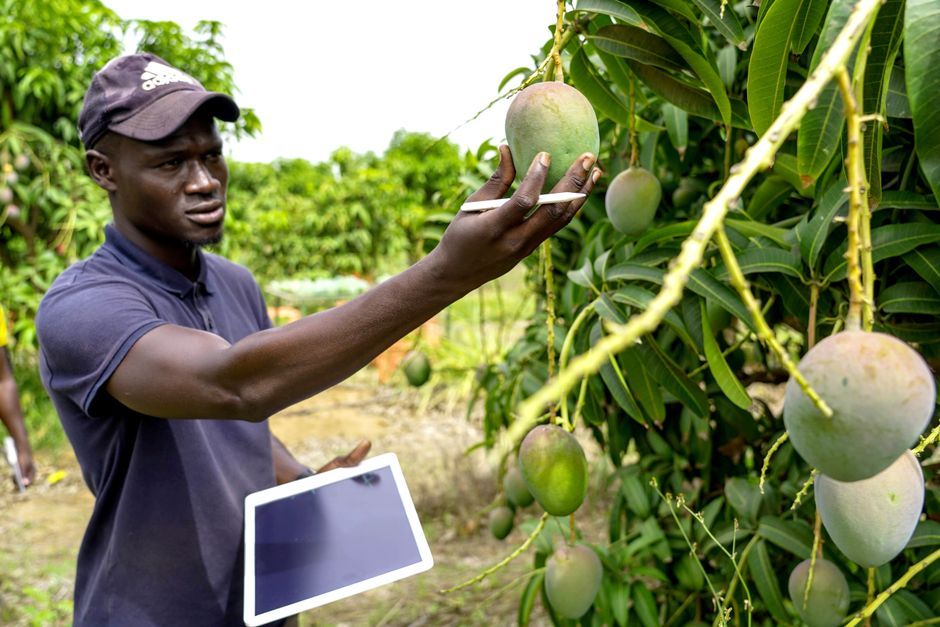

Photo by José Carlos Alexandre on Pexels
There is a seductive half-truth at the centre of every traceability pitch: that if a record cannot be altered, it can be trusted. It is half true because an immutable record is genuinely valuable — it removes one category of fraud, the quiet edit after the fact. But immutability answers only one question, and not the one that ultimately decides whether a smallholder reaches a premium buyer or a formal loan. A tamper-evident record proves that a record has not changed. It says nothing about whether what entered the record was true in the first place.
That distinction is easy to wave away in a demo and impossible to ignore in the field. Anchoring a false delivery to a blockchain does not make the delivery real; it makes a false claim permanent and portable. And the stakes rise sharply the moment the same data starts doing double duty — when a farmer’s delivery history determines both market access and credit, a bad record no longer just misstates the past, it misprices the future.
Immutable is not the same as true
The gap matters because of where value is heading. Digitised value-chain data is now widely treated as the route to smallholder finance and market inclusion — the World Bank has argued for years that turning agricultural activity into verifiable records is how the “unbankable” become bankable, and current work in Kenya is still focused on converting deliveries, payments and input use into usable lending signals [1][2]. On the market side, regimes like the European Union’s Deforestation Regulation increasingly require exporters to demonstrate, at the level of the individual plot, where a product came from and how it was grown — assertion is no longer enough [3]. In both cases the record is being asked to carry real economic weight. Which is precisely why its truth at the point of capture, not just its immutability afterward, becomes the whole game.
The numbers underneath make the point concrete. Smallholders produce roughly 80% of Kenya’s food, yet agriculture attracts under 5% of bank lending, and only an estimated 10–20% of farmers sit inside formal value chains [4][5]. The barrier is not a shortage of activity — a farmer delivering to a cooperative generates a rich, repeated stream of evidence. It is that the evidence is either undocumented or unverifiable: in dairy, 80–85% of milk still moves through informal channels, sold with no trail a lender or a premium buyer can rely on [6]. Making that evidence permanent is worthless if the evidence itself cannot be trusted. The problem was never mutability. It was provenance.
Who is allowed to say it happened?
Provenance turns traceability from a storage problem into a governance one, and it comes down to a handful of unglamorous questions. Who is authorised to attest that a delivery happened, that a plot belongs to this farmer, that a quality test passed, that an input was repaid? Who is allowed to challenge that assertion when it is wrong? And when a record is corrected, how do you prove — afterward, to a sceptical bank or auditor — what changed, who changed it, and why? A ledger that cannot answer those questions is not evidence. It is a very durable rumour.
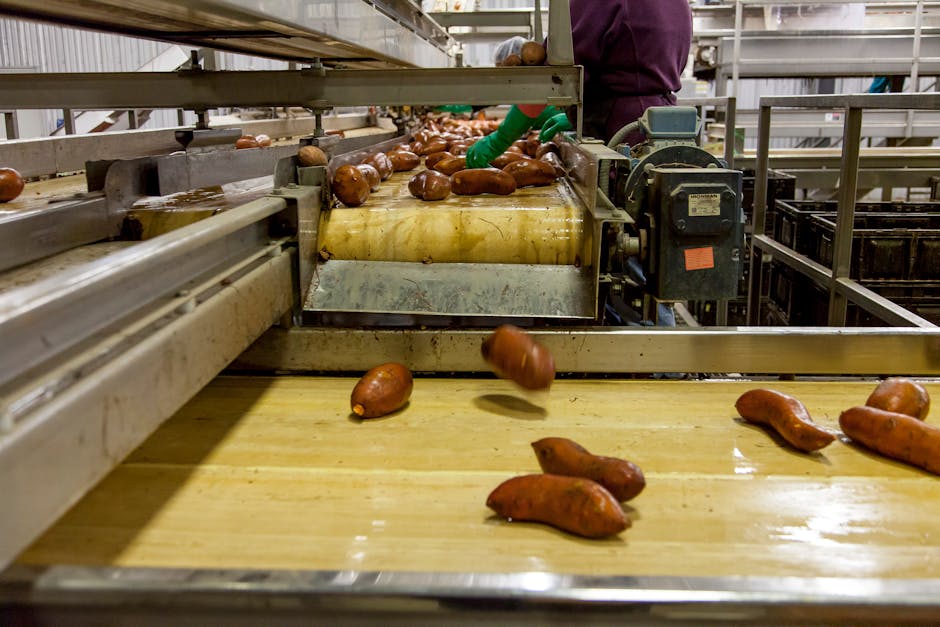
Photo by Mark Stebnicki on Pexels
This is also why self-reported farmer data, the default of so many agritech apps, is the weakest possible foundation. An app in which a farmer types in their own yields, deliveries and practices produces exactly the record a lender should distrust most: unattested, unchallengeable, and impossible to audit. The stronger pattern is to capture evidence at the event, from the counterparty or the instrument that was actually there — the cooperative’s intake scale that weighs the milk, the off-taker’s system that logs the delivery, the machine whose usage is recorded as it works, the sensor that watched the cold chain. The farmer still owns and benefits from the record; they simply do not have to be the one asserting it. Attestation, in other words, should come from wherever the truth actually lives.
Portability without provenance just moves bad evidence faster
None of this diminishes the case for farmer-owned, portable data — it sharpens it. Portability is what lets a cooperative’s record travel to a bank, or a plot’s history follow produce to an export buyer, instead of dying in a ledger. But portability is a multiplier, and it multiplies whatever it is given. Move well-governed evidence and you extend a farmer’s reach; move ungoverned evidence and you simply help a bad claim travel further and faster than it ever could on paper. Consequently, the design question is not “can we make the data portable and immutable?” — that part is nearly solved. It is “can we make the provenance travel with the data?” — the authority behind each assertion, the record of who could contest it, the audit trail of every correction.
Get that right and the real asset comes into focus. It is not the ledger, and it is not even the data. It is a verifiable chain of evidence, authority and accountability wrapped around a farmer’s activity — capture at the source rather than by self-report, a defined and challengeable attestation for every claim, correction-with-provenance treated as a first-class feature rather than an awkward exception, and all of it priced to work at per-delivery, per-plot scale so it reaches a farmer with three cows and not only a multinational exporter. That is the layer worth building, and the one we spend our days on at ZigoTrace.
Immutability was the easy 10% of the problem, and the industry has largely solved it. The hard, decisive 90% is governance: making sure that what gets written down is true, that the right party said it, that errors can be surfaced and corrected in the open, and that the whole chain of accountability travels with the record wherever it goes. Yet, it remains to be seen whether the systems now being built on top of Africa’s smallholders are designed for that harder problem — or whether they will simply make unverified claims permanent. Because a record that is trusted only because it cannot be changed is not the foundation of inclusion. It is just a more efficient way to be wrong.
References
- World Bank — digital agriculture and financial-inclusion work on turning value-chain data into verifiable records for smallholder finance.
- “Scaling digital financial services for smallholder farmers in Kenya” — International Food Policy Research Institute (IFPRI).
- Regulation (EU) 2023/1115 on deforestation-free products (EU Deforestation Regulation, EUDR) — European Commission.
- “Financing gap risks undermining Kenya’s agriculture growth, experts warn” — Capital FM Business, 2025.
- “Building trust and financing for Kenya’s agricultural growth” — PwC Kenya.
- “Kenya’s dairy sector is failing to meet domestic demand. How it can raise its game” — The Conversation; and “Overview of the Kenya Dairy Industry” — USDA Foreign Agricultural Service (FAS), 2024.
- GS1 — global standards for identification and event-level traceability (EPCIS).
- “Good data and record management practices” (ALCOA+ principles) — WHO Technical Report Series 996, Annex 5.
- “Inside the push to fix Africa’s broken agriculture finance system” — Business Daily Africa.
- Food safety and food-loss guidance for sub-Saharan supply chains — Food and Agriculture Organization of the United Nations (FAO).
Building traceability that a bank or an auditor will actually trust? Book a Demo — governed, farmer-owned provenance, captured at the source and built to travel.