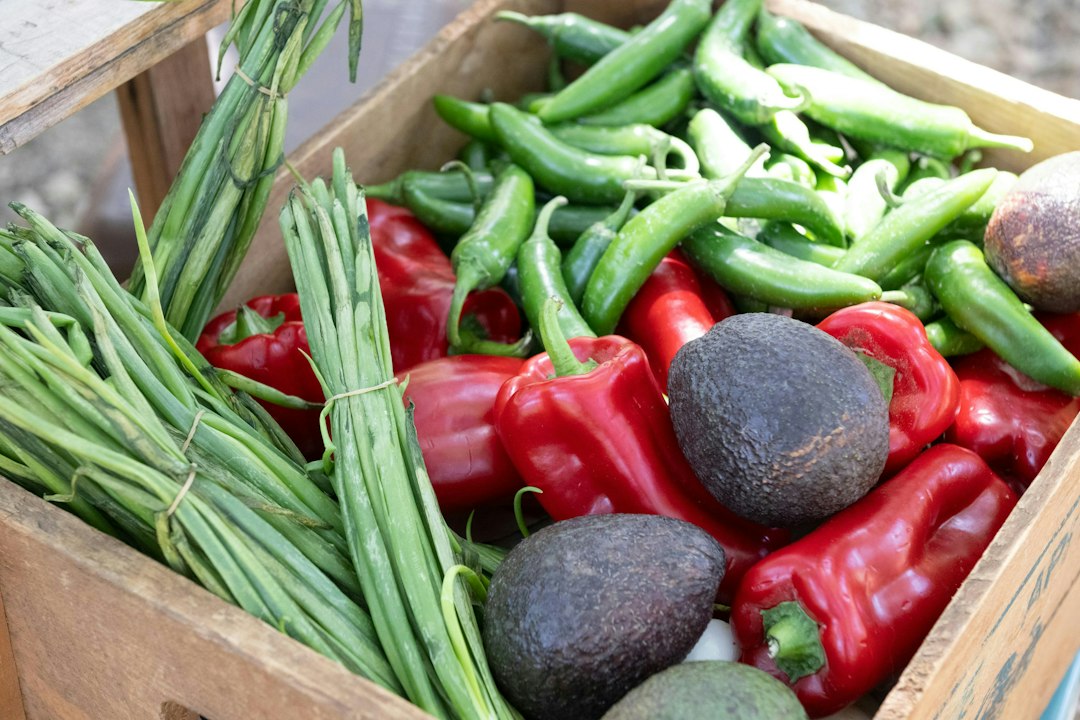
Food safety compliance traceability is the ability to show, for a specific lot, not only who supplied it and who received it, but whether the records that govern its safety were true of that lot at the moment they mattered. Almost one in ten people worldwide falls ill from contaminated food each year, about 600 million illnesses and 420,000 deaths on the World Health Organization’s estimates for 2010, published in 2015, and the WHO African Region carries the highest burden per population, with more than 91 million people falling ill and 137,000 dying each year [1][2]. The burden is mostly microbial, and a residue interception is not an outbreak. The lateness is shared: by the time a laboratory can see the problem, the lot has moved, and the records that would have shown the risk were never joined. A supply chain traceability file that can name the shipper and the buyer, and still cannot say whether a spray and a harvest on the same plot were far enough apart, is complete in the sense current food law asks for and silent on the question that failed the consignment.
Why food safety compliance traceability fails between two complete records
A residue violation is often a relationship between two records that are each, on their own, in order. The pre-harvest interval is the minimum time between the last pesticide application and harvest, it is printed on the product label, and keeping it is a legal requirement precisely so that residues fall to or below the maximum residue limit, the concentration of that substance legally tolerated on that food [3][4]. A spray book that records the product, the dose and the date is a complete spray record. A harvest ticket that records the plot, the date and the weight is a complete harvest record. Neither document, read alone, can say whether the interval was observed, because the violation lives in the time between them. Consequently, the implications of filing those two records in different books, or in different companies, are larger than a missing signature: the exporter can produce every page an auditor asks for and still have no way to see the lot that should never have been picked.
This is the unglamorous bit, and it is where most food-safety files quietly stop. A certificate of analysis tells you what a laboratory found in a sample after the fact. It does not tell you which other lots from the same application were not sampled, and it does not tell you that harvest fell on day three of a seven-day interval. Governed provenance has the same shape under a different rule: a record can be intact, signed and stored, and still not be true of the lot it is attached to. Food safety compliance traceability asks for that second property, the join, and most traceability systems were built to answer who held the goods, not whether the interval survived.
What EU residue checks and Kenya’s bean exports already show
The European picture looks calm until you look at where the failures land. In 2023 the European Food Safety Authority reported on 132,793 food samples analysed under the EU pesticide monitoring programmes. Of those, 127,816, or 96.3 percent, fell within legal limits. Maximum residue levels were exceeded in 4,977 samples, 3.7 percent, and once measurement uncertainty was taken into account 2,694 samples, 2.0 percent, were non-compliant and open to enforcement [5]. Those limits are set under Regulation (EC) No 396/2005, which is the rule a border laboratory is applying when it holds a consignment [6]. A two percent non-compliance rate is easy to describe as a system that works. Concentrated on a few origins and a few crops, it is also enough to close a market.
Kenya’s vegetables are the worked example. CBI, drawing on the Rapid Alert System for Food and Feed, counts 28 Kenyan green-bean consignments that failed EU maximum residue levels in 2024, more than Sri Lanka, Bangladesh and India combined in the same note, and records that Regulation (EU) 2019/1793 already requires checks on 10 percent of bean imports from Kenya [7]. The Agriculture and Food Authority, reported by Business Daily, put the wider vegetable season in commercial terms: export earnings fell 53.83 percent, from Sh50.9 billion in 2023 to Sh23.5 billion in 2024, MRL interceptions rose from 25 to 57, and the authority said EU inspection of Kenyan vegetables moved from 5 percent to 15 percent, blaming notifications on French beans and snow peas [8]. Those are different series, and they should not be added. They point the same way. Several retailers in the United Kingdom, Germany, the Netherlands and Austria do not buy at the legal ceiling: CBI says they ask for 50 percent or even 33 percent of the EU limit, and some cap active substances at three [7]. A lot that passes a public laboratory can still fail the buyer paying for the freight.
The 2024 Alert and Cooperation Network report shows the same pattern across the Union. Notifications rose 8 percent to 9,460, and Rapid Alert System notifications rose 12 percent to 5,250. About one third of those were border rejections, mainly pesticide residues in fruit and vegetables. Fruits and vegetables were the largest category in that network, 1,479 notifications, 16 percent of all Alert and Cooperation Network notices, and pesticide residues were the leading issue, with oranges, peppers, chlorpyrifos and acetamiprid recurring [9]. The laboratory is doing the job it was given. The open question is why the interval was not visible before the sample was drawn.
Why one step back and one step forward cannot see a pre-harvest interval
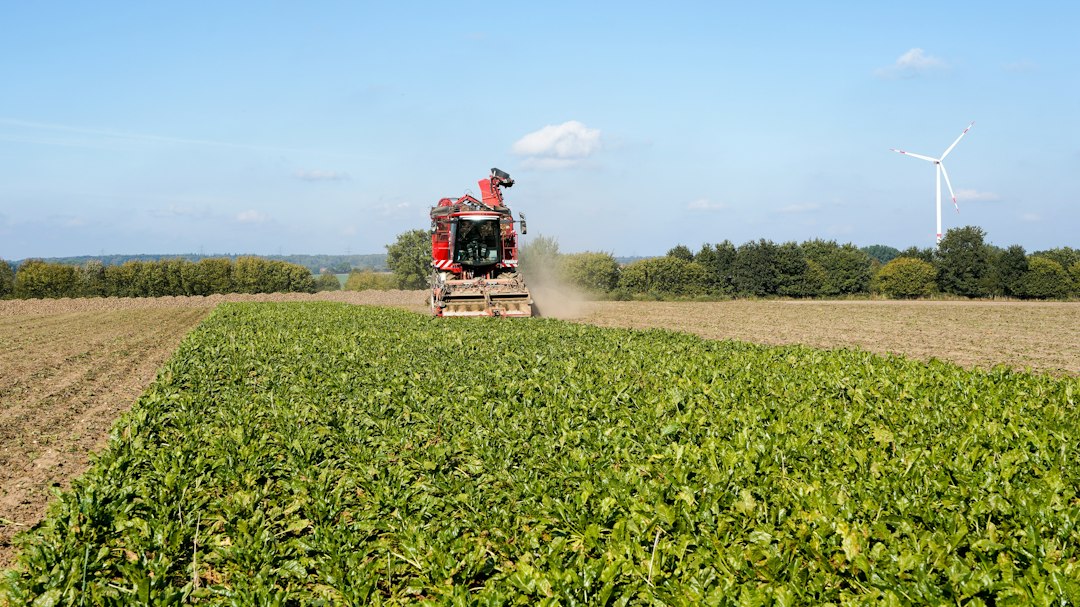
European food law has required traceability since 2002, and it defined the job narrowly on purpose. Article 18 of Regulation (EC) No 178/2002 says a food business must identify who supplied it and which businesses it supplied, and must produce that information to the competent authority on demand [10]. Commission guidance calls this one step back and one step forward: supplier to product, product to customer, with no duty to name the final consumer [11]. That design is good at a recall. It is weak at a residue, because the supplier of a pooled lot may be a broker who never saw the spray, and the customer may learn the result only when a border laboratory does. Nothing in Article 18 asks whether harvest and the last application on the same plot respected the interval on the label.
The United States is moving further along the lot, and still not as far as the interval. The Food Safety Modernization Act’s traceability rule requires a traceability lot code and key data elements at critical tracking events, including harvesting and cooling, for foods on the Food Traceability List, available to the Food and Drug Administration within 24 hours or a time the agency agrees [12]. The original compliance date was 20 January 2026. The FDA has said it will not enforce the rule before 20 July 2028, consistent with a direction from Congress [12]. A lot code that survives packing makes a recall faster, and a harvest date is useful. It still does not contain the product applied, the dose, or the interval that product required. An exporter can be ready for that rule and remain blind to the failure Kenya is already paying for.
The EU Deforestation Regulation already asks for a relationship to a plot, not merely to the company that shipped the container. Food safety has not written the pre-harvest interval into statute in those terms. Buyers and border laboratories are enforcing it anyway, one consignment at a time.
What has to be true before a laboratory result means anything
A laboratory result means something about a lot only when three earlier facts are already joined: which plot the lot came from, what was applied there, and whether harvest waited out the interval on the label. ZigoTrace’s general module sits on the same provenance graph as the other compliance checks, and the pre-harvest-interval check is what that graph is for. A spray record and a harvest record, read together, can flag a residue risk that neither record flags alone. Where either record is missing, or the interval on the label is not in hand, the honest output is inconclusive, not a guessed clear. That is the same rule the product already applies when a satellite pass cannot be read: a check that cannot answer must say so. A passed certificate of analysis is a statement about a sample. It is not a substitute for the interval, and a system that prints a pass because the sample was clean is describing the sample, not the lot.
Yet, it remains to be seen whether exporters will treat the interval as a record kept at picking, or as an argument had with a laboratory after the consignment has left. The second habit is the one the 2024 numbers describe. The first is available to any packhouse that already writes down the spray and already writes down the harvest, and simply never puts the two dates on the same line. Food safety compliance traceability, in that narrower sense, is not a new sensor and not a new certificate. It is the refusal to call a lot safe until the relationship the border is already punishing has actually been checked.
Book a demo to see whether the spray date and the harvest date on a lot you already ship would have survived the interval.
References
- World Health Organization, WHO estimates of the global burden of foodborne diseases: Foodborne Disease Burden Epidemiology Reference Group 2007-2015, 2015. https://www.who.int/publications/i/item/9789241565165
- World Health Organization, “WHO’s first ever global estimates of foodborne diseases find children under 5 account for almost one third of deaths,” news release, 3 December 2015. https://www.who.int/news/item/03-12-2015-who-s-first-ever-global-estimates-of-foodborne-diseases-find-children-under-5-account-for-almost-one-third-of-deaths
- Health Canada, “Understanding Preharvest Intervals for Pesticides.” https://www.canada.ca/en/health-canada/services/consumer-product-safety/reports-publications/pesticides-pest-management/fact-sheets-other-resources/preharvest-intervals.html
- Food and Agriculture Organization, “Maximum Residue Limit (MRL)” definition, JMPR appendices, after Codex Alimentarius Vol. 2A. https://www.fao.org/4/x5848e/X5848e0b.htm
- European Food Safety Authority, “The 2023 European Union report on pesticide residues in food,” EFSA Journal, 2025. https://efsa.onlinelibrary.wiley.com/doi/10.2903/j.efsa.2025.9398
- Regulation (EC) No 396/2005 of the European Parliament and of the Council on maximum residue levels of pesticides in or on food and feed of plant and animal origin. https://eur-lex.europa.eu/eli/reg/2005/396/oj
- CBI, “Entering the European market for fresh green beans,” updated 30 December 2025. https://www.cbi.eu/market-information/fresh-fruit-vegetables/green-beans/market-entry
- Linet Owoko, “Kenya vegetable exports hit by tough EU market rules,” Business Daily, 3 September 2025, reporting Agriculture and Food Authority disclosures. https://www.businessdailyafrica.com/bd/markets/commodities/kenya-vegetable-exports-hit-by-tough-eu-market-rules-5179240
- European Commission, Alert and Cooperation Network 2024 Annual Report, announced 2025. Commission notice: https://ec.europa.eu/newsroom/sante/newsletter-archives/63452
- Regulation (EC) No 178/2002, Article 18 (traceability). https://eur-lex.europa.eu/legal-content/EN/TXT/?uri=CELEX:32002R0178
- European Commission, Guidance on the implementation of articles 11, 12, 14, 17, 18, 19 and 20 of Regulation (EC) No 178/2002 on General Food Law, section on Article 18. https://food.ec.europa.eu/system/files/2016-10/gfl_req_guidance_rev_8_en.pdf
- U.S. Food and Drug Administration, “FSMA Final Rule on Requirements for Additional Traceability Records for Certain Foods.” https://www.fda.gov/food/food-safety-modernization-act-fsma/fsma-final-rule-requirements-additional-traceability-records-certain-foods
Frequently asked questions
What is food safety compliance traceability?
Food safety compliance traceability is the ability to show, for a specific lot, who handled it and whether the safety-relevant records were true of that lot, including whether harvest waited out the pre-harvest interval after the last pesticide application [3][10]. Naming the supplier and the customer, which is what Article 18 of Regulation (EC) No 178/2002 requires, does not by itself answer the interval [10][11].
What is a pre-harvest interval?
A pre-harvest interval is the minimum time between the last application of a pesticide and harvest of the treated crop. It is stated on the product label, and keeping it is what the label relies on so that residues stay at or below the maximum residue limit [3][4].
Does a passed residue test prove a lot was grown within the interval?
No. A certificate of analysis reports what a laboratory found in the sample it tested. It does not show which other lots from the same application were not sampled, and it does not reconstruct the days between spray and harvest. In 2023, 2.0 percent of 132,793 EU monitoring samples were non-compliant after measurement uncertainty, which is a statement about tested samples, not about every lot that shipped [5].
When do US food traceability records have to be ready?
The FDA’s Food Traceability Rule requires a traceability lot code and key data elements at events including harvesting and cooling. Its original compliance date was 20 January 2026. The FDA has said it will not enforce the rule before 20 July 2028 [12].