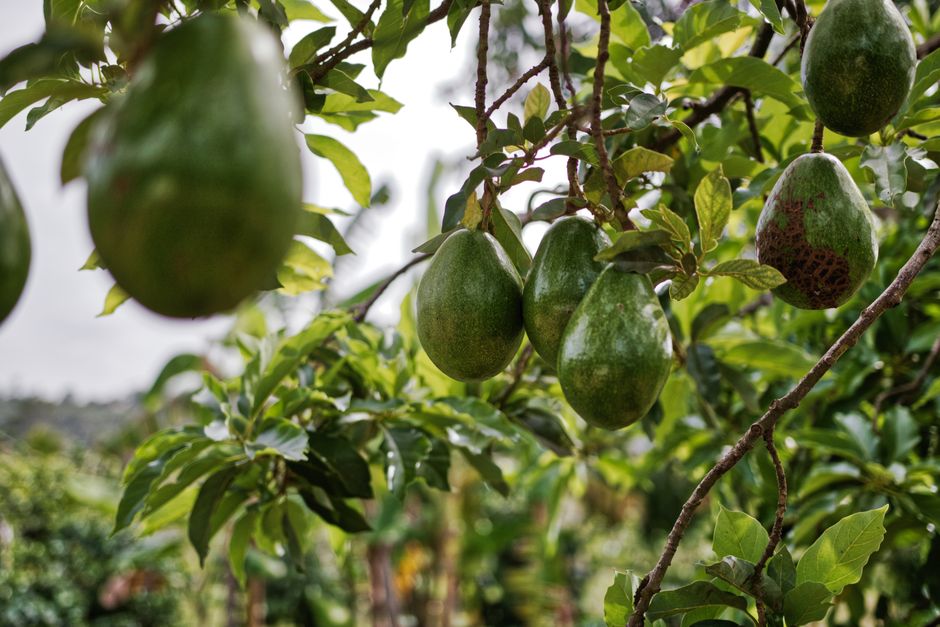

Photo by Matthias Oben on Pexels
The problem isn’t blockchain — it’s fragmentation
EUDR supply chain traceability across Africa — the compliance work exporters
now have to do under the European Union’s Deforestation Regulation (EUDR),
which requires proof that agricultural goods entering the EU market weren’t
grown on recently deforested land — has become the sharpest test yet of
whether the continent’s food traceability systems can actually deliver.
Today’s system across much of Africa resembles a patchwork of incompatible
platforms and fragmented datasets, stitched together by local pipelines
riddled with intermediaries and burdened by high transaction costs [1]. It
is a supply chain propped up by manual oversight, limited visibility, and
siloed trust structures — and it is precisely this fragmentation, rather
than any shortage of individual technologies, that explains why blockchain
on its own has struggled to deliver the transparency it promises.
Blockchain, artificial intelligence, and the Internet of Things are each
independently capable of solving a piece of the traceability problem, but
treated as separate bets rather than one integrated stack, none of them
closes the gap alone.
Based on the report underpinning this piece, the blockchain-in-agriculture
market is forecast to reach roughly $1.5 billion by 2026 [1], a figure that,
if it holds, would mark a meaningful reallocation of capital toward exactly
the kind of infrastructure smallholder-heavy supply chains have lacked.
Yet, it remains to be seen whether that capital finds its way to the
farmers and cooperatives who most need it, or whether it consolidates
around the large exporters and retailers already positioned to absorb new
compliance costs. This is not a hypothetical tension. Two structural futures
are already visible in how the technology is being deployed. In the first,
large corporations remain the primary power brokers within existing
institutional structures, data ownership stays centralized, and
small-scale farmers stay sidelined from premium markets whose entry
requirements they cannot economically meet. In the second, blockchain, AI,
and IoT operate on open, interoperable infrastructure unbound by legacy
systems, and the resulting shift in who can prove provenance ends up
reshaping who can access export markets at all.
What combined deployments already look like
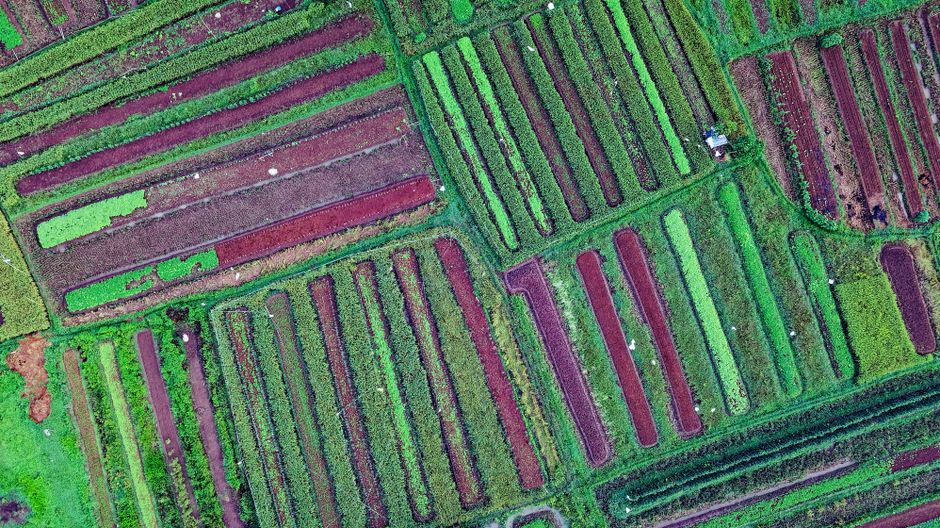
Photo by Tom Fisk on Pexels
The early evidence leans, cautiously, toward the second future being
technically achievable even where it is not yet the default. In Kenya,
Dimitra’s partnership with the One Million Avocados initiative combines
blockchain, AI, IoT, and satellite imaging to help small-scale avocado
farmers improve crop quality while addressing traceability requirements
tied to international regulatory standards [2]. Speaking about the project,
Consensys’ South African lead Monica Singer made the case that mobile, IoT,
and AI together outperform a blockchain ledger working in isolation [2] —
a claim that matters less as endorsement and more as an admission that
blockchain was never going to be traceability’s whole answer. Elsewhere,
Majid Al Futtaim’s partnership with IBM Food Trust gave Carrefour shoppers
across the Middle East, Asia, and Africa the ability to scan a QR code and
see a product’s production process, quality certifications, and
temperature data [3]. Hani Weiss, CEO of Majid Al Futtaim Retail, tied the
initiative to a broader shift in consumer expectations around food supply
trust [3] — the kind of demand-side pressure that, over the next few
years, will likely do more to force adoption than any single technology
vendor’s roadmap.
What both examples share is less about the specific technology stack and
more about sequencing: identity and data capture happen at the point of
production — the farm, the packhouse — rather than being reconstructed
after the fact from paperwork further down the chain. A barcode or DNA
marker created at the processing facility, without biochemical analysis in
the simplest implementations, already prevents adulteration and records a
product’s origin, contaminants, and additives before it moves anywhere
else [1]. That sequencing detail is easy to overlook in the abstract, but
it is exactly where most traceability systems fail in practice — not
because the ledger is unreliable, but because the data it’s asked to
verify was never captured cleanly at the source.
Supply Chain Traceability’s Real Blockers Aren’t Technical
Despite this evidence, the adoption blockers are structural rather than
technical, and they fall into three buckets that any traceability platform
operating on the continent has to design around rather than assume away
[1]. Infrastructure deficits — unreliable internet and power supply — still
constrain where IoT devices and blockchain platforms can be meaningfully
deployed, which is precisely why offline-first, sovereign deployment models
matter more in this market than in the fully-connected supply chains most
traceability tooling was originally built for. Cost constraints limit
access for small-scale farmers specifically, meaning any pricing model that
treats a smallholder cooperative the same as a multinational exporter will
quietly exclude the population the technology was supposed to serve first.
And regulatory fragmentation across countries continues to slow adoption
even where the underlying technology is ready, which is where compliance
deadlines like the EU’s deforestation regulation cut both ways: they create
urgency, but they also risk becoming another entry barrier if the tooling
built to meet them isn’t priced and designed for the farmers who need to
comply.
Blockchain-as-a-Service platforms, paired with the continued rollout of 5G
networks, narrow two of these three blockers at once. BaaS reduces the
technical and financial barrier to entry for smallholders and SMEs who lack
in-house blockchain expertise [1], while improved connectivity makes
real-time IoT data transmission viable in the rural areas where it has
historically been weakest. Neither development resolves the regulatory
fragmentation problem, which will keep requiring policy coordination that
no platform, however well designed, can substitute for on its own.
Where a Hedera-based layer fits
This is the design brief a traceability platform actually has to answer,
rather than the more comfortable one of simply proving blockchain can
record a supply chain event — it’s the same brief ZigoTrace’s own
positioning as a tokenization-as-a-service
platform is built to answer, across sectors well beyond the avocado and
coffee examples above. A sovereign, offline-first deployment model
addresses the infrastructure blocker directly, letting a cooperative
capture and later synchronize traceability data without depending on
constant connectivity. A fee structure built around micropayments — rather
than flat enterprise licensing — addresses the cost blocker by scaling
naturally with a farmer’s actual transaction volume instead of pricing them
out before they’ve proven the platform’s value. And building on a network
like Hedera, whose consensus model was designed for high-throughput,
low-latency transactions at low and predictable cost, addresses the
economics that make micropayment-based access viable in the first place —
something a higher-fee, congestion-prone chain would struggle to sustain at
smallholder scale. None of this resolves regulatory fragmentation on its
own, but it does mean the platform is at least not adding a fourth,
self-inflicted blocker on top of the three the market already has to
absorb.
Who owns the layer, not whether it works
Whether these technologies alone are enough to steer Africa’s food supply
chains toward full transparency remains genuinely uncertain, and it would
be a mistake to treat the trajectory as inevitable. Powerful interests that
benefit from opacity and fragmentation are deeply invested in maintaining
the status quo, and a market forecast is not the same thing as a market
outcome. Consequently, the implications of where blockchain-in-agriculture
capital actually flows over the next two years — toward open,
interoperable infrastructure accessible to smallholders, or toward
proprietary systems that reproduce today’s centralized data ownership under
a blockchain label — matter considerably more than whether the technology
works, which the Dimitra and Majid Al Futtaim examples already suggest it
does. The open question was never whether blockchain, AI, and IoT can trace
a product from farm to shelf. It is who gets to own the layer they run on,
and whether that layer is built to include the farmers whose compliance it
depends on, or simply to certify them from the outside.
References
[1] Blockchain, IoT and AI in Africa’s Food Supply Chains report (internal/
Chaintum source material) — market forecast, identity-creation mechanisms,
adoption-blocker framework, business-as-usual vs. change scenario framing.
[VERIFY: reference [1] states $1.5 million by 2026 but likely means $1.5 billion — confirm against Markets and Markets before publishing]
[2] Dimitra × One Million Avocados (OMA), Kenya — via Cointelegraph, quoting
Monica Singer, Consensys South Africa.
[3] Majid Al Futtaim × IBM Food Trust, Carrefour — quoting Hani Weiss, CEO,
Majid Al Futtaim Retail.
FAQ
What is EUDR and why does it affect African food exporters?
EUDR is the European Union’s Deforestation Regulation, which requires
proof that agricultural goods entering the EU market — including coffee,
cocoa, and palm oil — weren’t produced on land deforested after a set
cutoff date. For African exporters, that means traceability data has to
exist and be verifiable back to the individual farm plot [1].
Can blockchain alone solve Africa’s food traceability problem?
No — blockchain provides a tamper-proof record, but it can’t capture data
at the source or fix unreliable connectivity, high costs for smallholders,
or fragmented regulation across countries. It works best combined with AI
and IoT sensors, and only once those three structural blockers are
addressed [1] [2].
What is Hedera and why would a traceability platform use it?
Hedera is a public distributed ledger network whose consensus mechanism is
designed for high-throughput, low-latency transactions at low and
predictable cost — properties that make micropayment-based pricing viable
for smallholder farmers in a way a higher-fee, congestion-prone chain
typically can’t sustain.
What does “offline-first” mean for a traceability platform?
An offline-first, sovereign deployment model lets a farm or cooperative
capture traceability data locally and sync it to the network once
connectivity is available, rather than requiring constant internet access —
directly addressing the infrastructure deficits that limit IoT and
blockchain adoption in much of rural Africa [1].
Related on ZigoTrace: no prior articles are published yet — see
_shared/published-index.md. Once it has entries, 2–4 contextual links to
those pieces belong inline above, near the paragraphs that motivate them,
not in this footer block.
Ready to see EUDR-ready traceability in practice? Book a Demo