ZigoTrace

Tag: Africa

  • The Post-Harvest Loss Numbers Nobody Actually Measured

    The Post-Harvest Loss Numbers Nobody Actually Measured

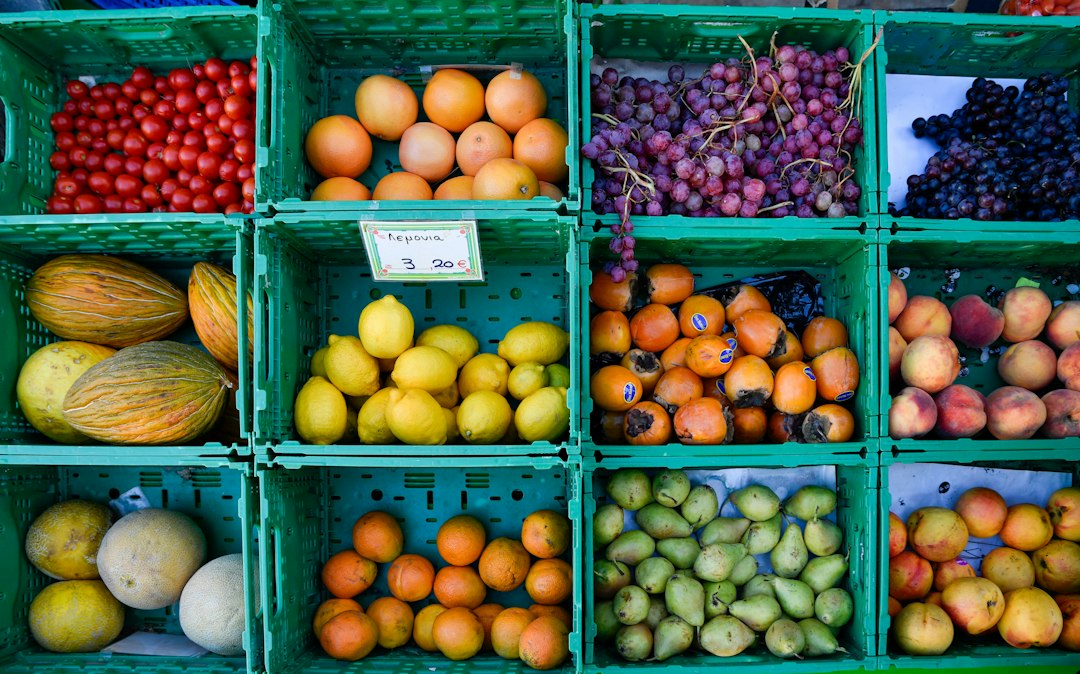
    Crates of harvested tomatoes at a market, the point in the chain where post harvest losses in Africa are highest and least measured.
    Photo by Margo Evardson on Unsplash (source)

    Almost every programme designed to reduce post harvest losses in Africa is being planned against a figure that was modelled rather than measured. The Food and Agriculture Organization puts global food loss after harvest at 13.3 percent for 2023, with sub-Saharan Africa the highest region at 23.0 percent, up from 22.1 percent in 2015 [1]. Those look like measurements. They are the output of an estimation model, and FAO says so plainly: the 2023 movement falls within the expected range of model oscillations and was driven largely by updated national production data and revised country-level estimates [1]. Something changed in the arithmetic. Whether anything changed in a warehouse is a separate question the data cannot answer. This is not a criticism of FAO, which has been unusually candid about the limits of what it publishes. It is a description of the ground every investment decision in this sector is currently standing on.

    Why the headline loss figures are estimates of an estimate

    The Global Food Loss Index is model-based by design, because nationally representative primary data on losses is generally not available [2]. The scale of that absence is easy to underestimate. In 2016, only 23 of 185 countries had reported loss data for even one commodity [3]. The model exists to fill a gap that is close to total, drawing on official statistics where they exist and on scientific literature where they do not, then extrapolating across commodity groups and regions. Based on that structure, we can understand why a single figure for a continent should be read as a reasoned position rather than a finding.

    The problem compounds at the point of collection. Where primary data does exist, much of it is self-reported by farmers and traders recalling what they lost, and the research on this is consistent: aggregated self-reported measures understate actual losses [4]. The bias runs in one direction. Nobody over-reports the grain they let spoil. So the sector works with modelled numbers built partly on measured numbers that are themselves systematically low, and the widely quoted range for Africa, between 30 and 50 percent [5], is wide enough to describe two entirely different problems. At 30 percent, post-harvest loss is a serious inefficiency. At 50 percent, half of everything grown never feeds anyone, and the economics of African agriculture are not what anyone’s spreadsheet says they are. Programme documents cite the range as though the distinction were a rounding detail.

    Set against that, the global picture from the waste side is comparatively well instrumented. UNEP’s Food Waste Index found 1.05 billion tonnes of food wasted in 2022, roughly 19 percent of what reached consumers, on top of the 13 percent lost earlier in supply chains, with households responsible for 631 million tonnes, about 79 kilograms per person per year [6]. Consumer-end waste happens in countries with retail scanners, municipal waste audits and census infrastructure. Farm-gate and first-mile loss happens where none of that exists, which is precisely where the losses are largest. The measurement effort is inversely proportional to the size of the problem.

    The money is arriving regardless, and it cannot be evaluated

    Capital has stopped waiting for better numbers. The Green Climate Fund’s Re-Gain programme is preparing to scale post-harvest loss solutions across seven countries, Burkina Faso, Ethiopia, Kenya, Malawi, Tanzania, Uganda and Zambia [5]. Cold-chain operators are raising real money: Koolboks closed an 11 million dollar Series A in September 2025 and reports more than 10,000 solar-powered freezers deployed across 25 countries [7], while in Kenya SokoFresh runs cold storage for over 7,000 farmers and InspiraFarms raised 1.09 million dollars in 2024 to extend off-grid capacity [8]. The Middle East and Africa cold chain market is forecast to grow from 23.8 billion dollars in 2022 to 35.1 billion by 2028 [9]. All of this is aimed at a bottleneck that is undeniably real: only around 5 percent of fresh produce in Africa passes through a cold chain at any point, and fruit and vegetables carry losses at the top of the 30 to 50 percent range [9].

    Yet consider what happens at the end of a five-year programme. A fund has financed several hundred cold rooms. It wants to report how much food was saved. The baseline it started from was modelled, the endline will be modelled by the same method, and the difference between two model outputs is not evidence that produce survived. Worse, a genuinely successful intervention can look like a failure: better record-keeping at a site that has just been equipped with a monitored cold room will often surface losses that were previously invisible, so measured loss goes up while real loss goes down. Consequently, the implications of this gap reach past accounting. Investors price unmeasurable outcomes conservatively, which means the cost of capital for post-harvest infrastructure stays higher than its actual returns warrant, and the projects that get funded are the ones whose benefits can be asserted confidently rather than the ones that work best.

    The data that would settle it already exists at intake
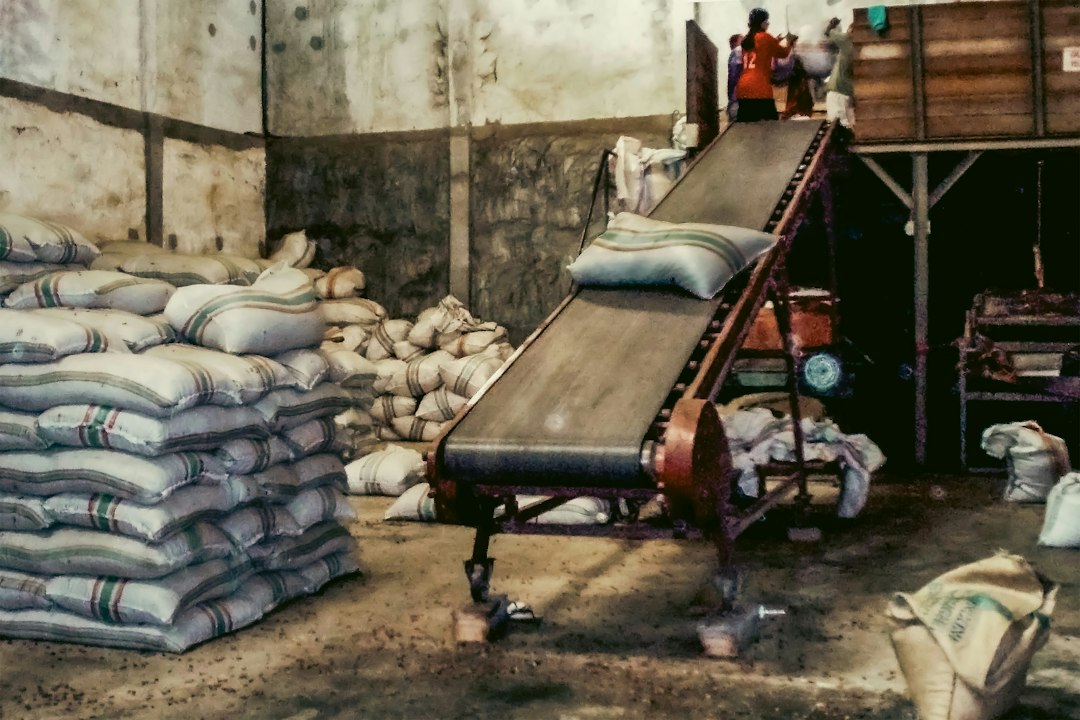
    Produce being weighed at intake, the record that turns post-harvest loss measurement into arithmetic rather than a survey.
    Photo by motomoto sc on Unsplash (source)

    Here is what makes this frustrating rather than merely difficult. The measurement everyone is missing is not exotic. Post-harvest loss, at any single step, is the difference between what went in and what came out, adjusted for grade. A cooperative that weighs each member’s delivery at intake, records a grade, and later dispatches a known tonnage to a buyer has, without intending to, described its own loss. The numbers are written down. They are simply written down in separate places, for separate purposes, by people who were never asked to compare them.

    This is the same structural problem that export compliance has spent the last three years forcing the sector to solve. An operator preparing an EUDR due diligence statement has to tie a shipment back through aggregation to the plots that produced it, which means recording what entered the chain, what left it, and how the two relate at every step in between. Once that chain exists, mass-balance arithmetic across it is close to free: a conservation check that flags where output exceeds plausible input, or where input disappears without a corresponding dispatch, is the same calculation a loss measurement needs. The difference is only which question you ask of the record. Firms building this capture for supply chain traceability reasons are inadvertently building the first credible loss measurement infrastructure the continent has had, and most of them have not noticed.

    There is a condition attached, and it is the one that decides whether any of this is worth trusting. The record has to be created at the moment of the event, by or with the counterparty to it, rather than reconstructed afterwards. A weight captured at the scale by the person receiving the delivery is evidence. The same figure recalled at the end of the season is the self-reported data that the literature already shows understates by an unknown margin [4]. The distinction between capture and recall is, in practice, the entire difference between a number a lender will underwrite and a number that merely populates a report.

    What changes when the number becomes defensible

    It would be overselling this to suggest that measurement saves food. It does not. A perfectly instrumented chain that tells you precisely how many tonnes of tomatoes rotted has saved no tomatoes, and the first honest consequence of better measurement will likely be an uncomfortable upward revision, since self-reported baselines understate and better-instrumented sites find more. Any organisation adopting this should expect its loss numbers to get worse before they get better, and should say so publicly before the first data lands rather than after.

    What changes is what becomes financeable. A cooperative that can demonstrate, from its own intake records, that losses at a specific step fell by a specific proportion after a specific intervention has an asset it did not have before: an evidence-backed claim about its own operations, of the kind explored in Provable, Bankable, Owned. That claim is the thing a lender, an off-taker or a results-based funder can actually price. Yet it remains to be seen whether the sector reaches for it, because the incentive to measure honestly is weakest exactly where the losses are largest, and a number that makes a programme look worse in year one is a hard thing to volunteer. The case for doing it anyway is that the alternative, another decade of planning against a range as wide as 30 to 50 percent, has already been tried.

    See what your own records can already prove. ZigoTrace reads the intake, dispatch and inventory records a cooperative or exporter already keeps and names the gaps in them. Book a demo.

    Frequently asked questions about post harvest losses in Africa

    What percentage of food is lost after harvest in Africa?

    FAO estimates 23.0 percent for sub-Saharan Africa in 2023, the highest of any region, against a global figure of 13.3 percent [1]. Programme documents often quote a wider 30 to 50 percent range [5]. Both are modelled estimates rather than measurements, which is why they differ so much.

    Why is post-harvest loss so hard to measure?

    Nationally representative primary data mostly does not exist, so FAO’s Food Loss Index is model-based [2]. Where primary data is collected it is often self-reported, and self-reported loss consistently understates what actually happened [4].

    Does cold storage reduce post-harvest losses in Africa?

    It addresses a real bottleneck, since only around 5 percent of fresh produce passes through a cold chain at all [9]. Whether a specific deployment worked is currently hard to prove, because the before and after figures usually come from the same model rather than from site records.

    How can a cooperative measure its own post-harvest loss?

    From records it probably already keeps. Loss at any step is the difference between what entered and what left, adjusted for grade, so first-mile data such as intake weights and dispatch tonnages, captured at the moment of the event, gives a defensible figure without a separate survey.

    References

    1. FAO, Sustainable Development Goals Data Portal, indicator 12.3.1(a) Global food losses.
    2. FAO, SDG indicator 12.3.1 metadata, Food Loss Index methodology.
    3. FAO, analysis of country reporting on post-harvest loss data availability.
    4. CGIAR, research on measuring post-harvest losses and the bias in self-reported estimates.
    5. Green Climate Fund, Re-Gain: Scaling solutions for food loss in Africa, project preparation document.
    6. UNEP, Food Waste Index Report 2024: Think Eat Save.
    7. Sector press reporting on Koolboks’ September 2025 Series A and solar freezer deployment.
    8. Sector press reporting on SokoFresh and InspiraFarms cold-chain operations in Kenya.
    9. Sector reporting on African cold-chain coverage and Middle East and Africa cold chain market forecasts.
    10. World Bank and FAO, Missing Food: The Case of Postharvest Grain Losses in Sub-Saharan Africa.
    11. FAO, Stemming post-harvest waste crucial to African food security.
  • EUDR Supply Chain Traceability in Africa: Why Blockchain Alone Isn’t Enough

    EUDR Supply Chain Traceability in Africa: Why Blockchain Alone Isn’t Enough

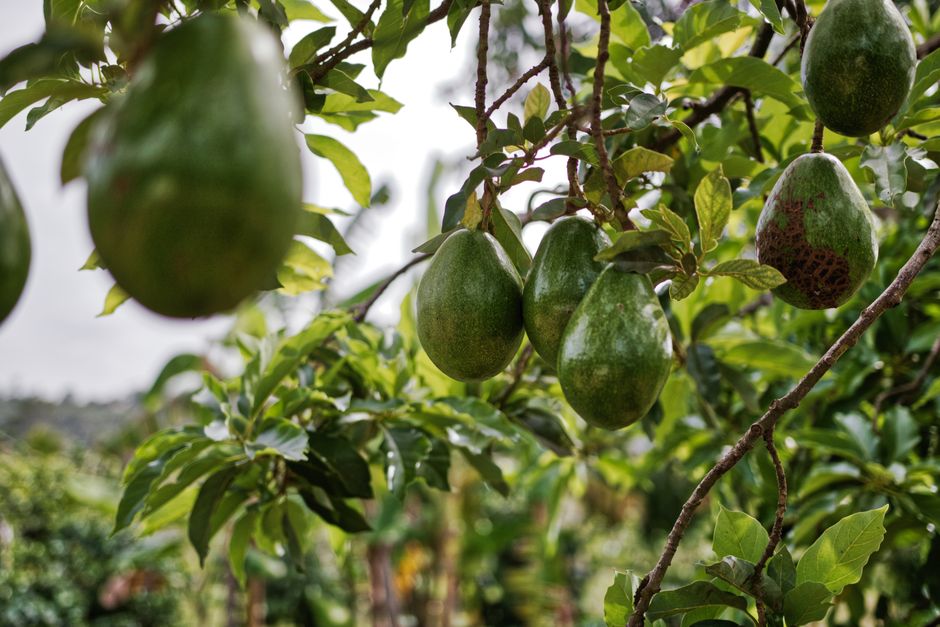
    Rows of avocado trees on a smallholder farm in Kenya
    Photo by Matthias Oben on Pexels

    The problem isn’t blockchain — it’s fragmentation

    EUDR supply chain traceability across Africa — the compliance work exporters
    now have to do under the European Union’s Deforestation Regulation (EUDR),
    which requires proof that agricultural goods entering the EU market weren’t
    grown on recently deforested land — has become the sharpest test yet of
    whether the continent’s food traceability systems can actually deliver.
    Today’s system across much of Africa resembles a patchwork of incompatible
    platforms and fragmented datasets, stitched together by local pipelines
    riddled with intermediaries and burdened by high transaction costs [1]. It
    is a supply chain propped up by manual oversight, limited visibility, and
    siloed trust structures — and it is precisely this fragmentation, rather
    than any shortage of individual technologies, that explains why blockchain
    on its own has struggled to deliver the transparency it promises.
    Blockchain, artificial intelligence, and the Internet of Things are each
    independently capable of solving a piece of the traceability problem, but
    treated as separate bets rather than one integrated stack, none of them
    closes the gap alone.

    Based on the report underpinning this piece, the blockchain-in-agriculture
    market is forecast to reach roughly $1.5 billion by 2026 [1], a figure that,
    if it holds, would mark a meaningful reallocation of capital toward exactly
    the kind of infrastructure smallholder-heavy supply chains have lacked.
    Yet, it remains to be seen whether that capital finds its way to the
    farmers and cooperatives who most need it, or whether it consolidates
    around the large exporters and retailers already positioned to absorb new
    compliance costs. This is not a hypothetical tension. Two structural futures
    are already visible in how the technology is being deployed. In the first,
    large corporations remain the primary power brokers within existing
    institutional structures, data ownership stays centralized, and
    small-scale farmers stay sidelined from premium markets whose entry
    requirements they cannot economically meet. In the second, blockchain, AI,
    and IoT operate on open, interoperable infrastructure unbound by legacy
    systems, and the resulting shift in who can prove provenance ends up
    reshaping who can access export markets at all.

    What combined deployments already look like

    Satellite imagery overlaid on farmland for crop monitoring
    Photo by Tom Fisk on Pexels

    The early evidence leans, cautiously, toward the second future being
    technically achievable even where it is not yet the default. In Kenya,
    Dimitra’s partnership with the One Million Avocados initiative combines
    blockchain, AI, IoT, and satellite imaging to help small-scale avocado
    farmers improve crop quality while addressing traceability requirements
    tied to international regulatory standards [2]. Speaking about the project,
    Consensys’ South African lead Monica Singer made the case that mobile, IoT,
    and AI together outperform a blockchain ledger working in isolation [2] —
    a claim that matters less as endorsement and more as an admission that
    blockchain was never going to be traceability’s whole answer. Elsewhere,
    Majid Al Futtaim’s partnership with IBM Food Trust gave Carrefour shoppers
    across the Middle East, Asia, and Africa the ability to scan a QR code and
    see a product’s production process, quality certifications, and
    temperature data [3]. Hani Weiss, CEO of Majid Al Futtaim Retail, tied the
    initiative to a broader shift in consumer expectations around food supply
    trust [3] — the kind of demand-side pressure that, over the next few
    years, will likely do more to force adoption than any single technology
    vendor’s roadmap.

    What both examples share is less about the specific technology stack and
    more about sequencing: identity and data capture happen at the point of
    production — the farm, the packhouse — rather than being reconstructed
    after the fact from paperwork further down the chain. A barcode or DNA
    marker created at the processing facility, without biochemical analysis in
    the simplest implementations, already prevents adulteration and records a
    product’s origin, contaminants, and additives before it moves anywhere
    else [1]. That sequencing detail is easy to overlook in the abstract, but
    it is exactly where most traceability systems fail in practice — not
    because the ledger is unreliable, but because the data it’s asked to
    verify was never captured cleanly at the source.

    Supply Chain Traceability’s Real Blockers Aren’t Technical

    Despite this evidence, the adoption blockers are structural rather than
    technical, and they fall into three buckets that any traceability platform
    operating on the continent has to design around rather than assume away
    [1]. Infrastructure deficits — unreliable internet and power supply — still
    constrain where IoT devices and blockchain platforms can be meaningfully
    deployed, which is precisely why offline-first, sovereign deployment models
    matter more in this market than in the fully-connected supply chains most
    traceability tooling was originally built for. Cost constraints limit
    access for small-scale farmers specifically, meaning any pricing model that
    treats a smallholder cooperative the same as a multinational exporter will
    quietly exclude the population the technology was supposed to serve first.
    And regulatory fragmentation across countries continues to slow adoption
    even where the underlying technology is ready, which is where compliance
    deadlines like the EU’s deforestation regulation cut both ways: they create
    urgency, but they also risk becoming another entry barrier if the tooling
    built to meet them isn’t priced and designed for the farmers who need to
    comply.

    Blockchain-as-a-Service platforms, paired with the continued rollout of 5G
    networks, narrow two of these three blockers at once. BaaS reduces the
    technical and financial barrier to entry for smallholders and SMEs who lack
    in-house blockchain expertise [1], while improved connectivity makes
    real-time IoT data transmission viable in the rural areas where it has
    historically been weakest. Neither development resolves the regulatory
    fragmentation problem, which will keep requiring policy coordination that
    no platform, however well designed, can substitute for on its own.

    Where a Hedera-based layer fits

    This is the design brief a traceability platform actually has to answer,
    rather than the more comfortable one of simply proving blockchain can
    record a supply chain event — it’s the same brief ZigoTrace’s own
    positioning
    as a tokenization-as-a-service
    platform is built to answer, across sectors well beyond the avocado and
    coffee examples above. A sovereign, offline-first deployment model
    addresses the infrastructure blocker directly, letting a cooperative
    capture and later synchronize traceability data without depending on
    constant connectivity. A fee structure built around micropayments — rather
    than flat enterprise licensing — addresses the cost blocker by scaling
    naturally with a farmer’s actual transaction volume instead of pricing them
    out before they’ve proven the platform’s value. And building on a network
    like Hedera, whose consensus model was designed for high-throughput,
    low-latency transactions at low and predictable cost, addresses the
    economics that make micropayment-based access viable in the first place —
    something a higher-fee, congestion-prone chain would struggle to sustain at
    smallholder scale. None of this resolves regulatory fragmentation on its
    own, but it does mean the platform is at least not adding a fourth,
    self-inflicted blocker on top of the three the market already has to
    absorb.

    Who owns the layer, not whether it works

    Whether these technologies alone are enough to steer Africa’s food supply
    chains toward full transparency remains genuinely uncertain, and it would
    be a mistake to treat the trajectory as inevitable. Powerful interests that
    benefit from opacity and fragmentation are deeply invested in maintaining
    the status quo, and a market forecast is not the same thing as a market
    outcome. Consequently, the implications of where blockchain-in-agriculture
    capital actually flows over the next two years — toward open,
    interoperable infrastructure accessible to smallholders, or toward
    proprietary systems that reproduce today’s centralized data ownership under
    a blockchain label — matter considerably more than whether the technology
    works, which the Dimitra and Majid Al Futtaim examples already suggest it
    does. The open question was never whether blockchain, AI, and IoT can trace
    a product from farm to shelf. It is who gets to own the layer they run on,
    and whether that layer is built to include the farmers whose compliance it
    depends on, or simply to certify them from the outside.


    References

    [1] Blockchain, IoT and AI in Africa’s Food Supply Chains report (internal/
    Chaintum source material) — market forecast, identity-creation mechanisms,
    adoption-blocker framework, business-as-usual vs. change scenario framing.
    [VERIFY: reference [1] states $1.5 million by 2026 but likely means $1.5 billion — confirm against Markets and Markets before publishing]
    [2] Dimitra × One Million Avocados (OMA), Kenya — via Cointelegraph, quoting
    Monica Singer, Consensys South Africa.
    [3] Majid Al Futtaim × IBM Food Trust, Carrefour — quoting Hani Weiss, CEO,
    Majid Al Futtaim Retail.

    FAQ

    What is EUDR and why does it affect African food exporters?
    EUDR is the European Union’s Deforestation Regulation, which requires
    proof that agricultural goods entering the EU market — including coffee,
    cocoa, and palm oil — weren’t produced on land deforested after a set
    cutoff date. For African exporters, that means traceability data has to
    exist and be verifiable back to the individual farm plot [1].

    Can blockchain alone solve Africa’s food traceability problem?
    No — blockchain provides a tamper-proof record, but it can’t capture data
    at the source or fix unreliable connectivity, high costs for smallholders,
    or fragmented regulation across countries. It works best combined with AI
    and IoT sensors, and only once those three structural blockers are
    addressed [1] [2].

    What is Hedera and why would a traceability platform use it?
    Hedera is a public distributed ledger network whose consensus mechanism is
    designed for high-throughput, low-latency transactions at low and
    predictable cost — properties that make micropayment-based pricing viable
    for smallholder farmers in a way a higher-fee, congestion-prone chain
    typically can’t sustain.

    What does “offline-first” mean for a traceability platform?
    An offline-first, sovereign deployment model lets a farm or cooperative
    capture traceability data locally and sync it to the network once
    connectivity is available, rather than requiring constant internet access —
    directly addressing the infrastructure deficits that limit IoT and
    blockchain adoption in much of rural Africa [1].


    Related on ZigoTrace: no prior articles are published yet — see
    _shared/published-index.md. Once it has entries, 2–4 contextual links to
    those pieces belong inline above, near the paragraphs that motivate them,
    not in this footer block.

    Ready to see EUDR-ready traceability in practice? Book a Demo