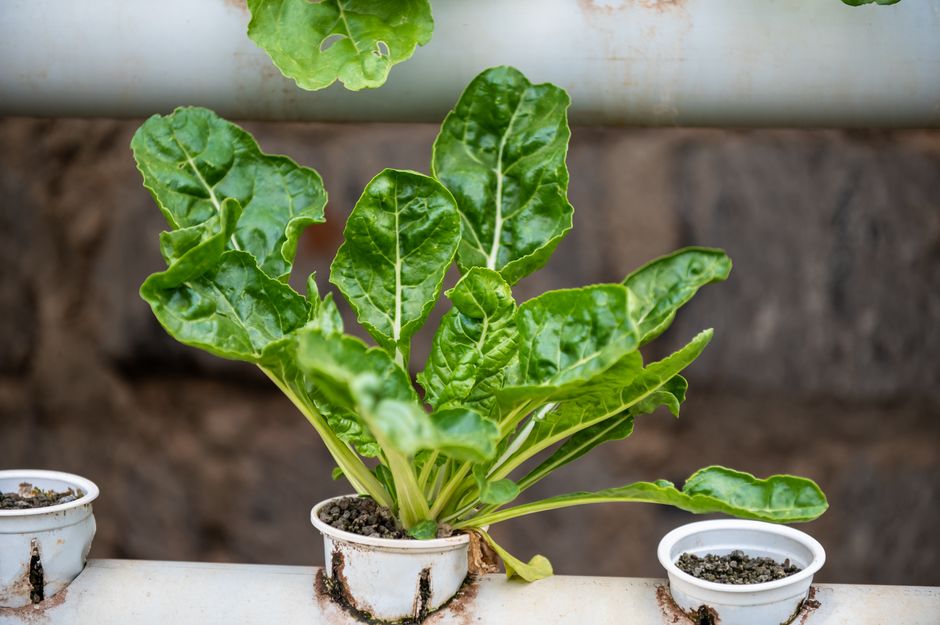

Photo by Collines Omondi on Pexels
Something is shifting in how African smallholders reach markets and money, and it is easy to miss because it does not look like technology. Two movements are underway at once. One is a push to make smallholder food not merely safe but provably safe — traceable from plot to buyer, able to clear a premium shelf or an export standard on evidence rather than assurance. The other is a push to make smallholder farmers financially visible — to turn the deliveries, payments and purchases they already make into a record a lender can actually read. Framed as agriculture on one hand and finance on the other, they look like separate agendas. Underneath, they are the same problem stated twice: a farmer who does everything right is still invisible to the market and to the bank, because the proof of what they do never leaves the farm.
Growing the food, invisible to the bank
The mismatch is stark once the numbers are laid out. Smallholder farmers account for roughly 80% of Kenya’s food production and around 70% of marketed agricultural output, yet only an estimated 10–20% of them sit inside formal value chains [4]. Agriculture contributes more than a quarter of GDP while attracting less than 5% of total bank lending — commercial-bank credit to the sector has hovered near 3% of private-sector lending for years [4][5]. Zoom out and it compounds: only about 6% of African smallholders can access credit at all, collateral demands routinely reach 120% of the loan value, and the annual smallholder financing gap is estimated at roughly USD 75 billion [6]. The issue is rarely that these farmers are not creditworthy. It is that their creditworthiness is invisible — held, if anywhere, in cash transactions, handwritten cooperative books and delayed payments that leave no trail a lender can price.
That invisibility is not for lack of activity. A farmer delivering to a cooperative already generates a rich stream of data: volumes, consistency, reliability across seasons, input purchases, repayment behaviour. Dairy makes the point vividly — smallholders produce around 56% of Kenya’s milk, some 1.8 million farmers keeping between one and five cows each, yet 80–85% of that milk moves through the informal market, sold raw and undocumented for a higher farmgate price but no paper trail and real food-safety risk from poor handling [1][2]. The cooperatives that could formalise it aggregate only a share [3]. The value a farmer creates is real and repeated; it simply dies in a ledger, unable to travel to the bank that would lend against it or the buyer who would pay a premium for it.

Photo by Justin Muhinda on Pexels
Safe food that can’t prove it’s safe
The market side of the story runs on the same logic. Efforts to lift smallholder horticulture toward premium and formal buyers increasingly pair good agronomy — biological crop protection, efficient water use, better practice — with something quieter and more decisive: digital traceability and food-safety compliance. Read closely, most of that second list is about generating trustworthy data at the point of production. And it is there because safe food, on its own, is no longer enough. Safe food has to be provable to command a premium, clear a standard, or earn a consumer’s trust.
Provability is where the ambition meets its hardest external test. The European Union’s Deforestation Regulation and tightening food-safety regimes increasingly require exporters to demonstrate — not assert — where a product came from and how it was grown, down to the plot [9]. Add the continent’s persistent post-harvest and food-safety losses, which strip value precisely where handling and records are weakest [10], and the barrier comes into focus. A programme that improves practice but cannot produce verifiable, plot-level evidence has solved the agronomy and left the market barrier standing. The same move that makes a dairy farmer “bankable” makes a horticulture cooperative “exportable”: in each case the asset being built is not the crop or the cow, but the credible, portable data trail behind it.
One missing layer
Seen together, the market push and the finance push converge on a single missing layer: verifiable, farmer-owned data that can move — from the cooperative to the lender, from the farm to the buyer, from an informal record to a formal one — without losing its integrity along the way. Both are, underneath the sector language, data-infrastructure problems. And that is the encouraging part. Serious actors are independently arriving at the same conclusion: the binding constraint is trust infrastructure, not another farmer-facing dashboard.
Yet, it remains to be seen who ends up owning that layer. Two futures sit inside the same shift. In one, the data a farmer generates is captured and held by whichever platform digitises it, and the farmer becomes a data subject — visible to a single counterparty, but not in control of the record, and unable to carry it to the next buyer or the next season’s financier. In the other, the data is owned by the farmer and the cooperative, verifiable by anyone precisely because it is anchored to a tamper-evident record that no single vendor has to be trusted to keep honest. Consequently, the implications of that design choice run far past any one programme: it decides whether digitisation deepens dependence or finally hands smallholders an asset they can take anywhere.
The institutions already hold the trust
The most valuable asset in all of this is one no programme has to build. Africa’s cooperatives, chamas and farmer groups already coordinate trust at a scale formal systems struggle to match — the cooperative that knows whose milk is reliable, the savings group that already prices its members’ risk. The task is not to replace those institutions with software but to make the trust they already hold verifiable and portable: to turn what a cooperative already knows into data the farmer owns and any bank or buyer can independently confirm. Done that way, technology amplifies the institution instead of bypassing it — which, in a market where smallholders grow roughly 80% of the food, is the only version that reaches scale.
Two conditions decide whether that layer reaches farmers or stalls in a pilot. The first is sovereignty and integrity: records that stay under the farmer’s and cooperative’s control, anchored to a tamper-evident ledger so a buyer in Nairobi or an auditor in Brussels can verify them without taking any one company’s word for it. The second is cost: a verification model priced for a multinational exporter will never reach a farmer with three cows, so the economics have to hold at per-delivery, per-plot scale — the point at which a low, predictable transaction cost quietly becomes the line between inclusion and exclusion. That is the layer worth building, and the one we spend our days on at ZigoTrace.
The open question for African agriculture was never whether smallholders can grow safe food or generate bankable activity; the current wave of effort already assumes they can. It is whether the data layer built on top of them is designed to travel — owned by the farmers whose trust it encodes, verifiable by everyone downstream — or merely to make them legible to one platform at a time. That is the choice worth getting right, because the institutions, the produce and the milk are already there.
References
- “Kenya’s dairy sector is failing to meet domestic demand. How it can raise its game” — The Conversation.
- “Overview of the Kenya Dairy Industry” — USDA Foreign Agricultural Service (FAS), Nairobi, 2024.
- “Impact of cooperatives on smallholder dairy farmers’ income in Kenya” — Cogent Economics & Finance (Taylor & Francis), 2023.
- “Financing gap risks undermining Kenya’s agriculture growth, experts warn” — Capital FM Business, 2025.
- “Building trust and financing for Kenya’s agricultural growth” — PwC Kenya.
- “Inside the push to fix Africa’s broken agriculture finance system” — Business Daily Africa.
- “Scaling digital financial services for smallholder farmers in Kenya” — International Food Policy Research Institute (IFPRI).
- “Closing the financing gap for Africa’s smallholder farmers” — Kenya News Agency.
- Regulation (EU) 2023/1115 on deforestation-free products (EU Deforestation Regulation, EUDR) — European Commission.
- “Food loss and waste” and food-safety guidance for sub-Saharan Africa — Food and Agriculture Organization of the United Nations (FAO).
Working on safe-food traceability or farmer-finance data in Africa? Book a Demo — farmer-owned, EUDR-ready traceability, built to reach the smallholder.